When my partner Rob turned 40, there was only one place his lifelong obsession with Egyptology was ever going to take us. I booked it a year in advance, packed my factor 50 suncream and a suitcase full of cotton and linen clothes. Egypt delivered everything we could have dreamed of, and then some.
Getting there and the small matter of the visa
We booked the trip through TUI as an all-inclusive Nile cruise package aboard the Al Horaya, flying from Gatwick. Adding on parking, insurance and transfers made the whole thing wonderfully straightforward, exactly what you want when you’re planning a complex itinerary in a country you’ve never visited as an adult. I’d also pre-booked several paid excursions throughout the week, on top of the two complimentary TUI tours. Every penny was worth it.
One word of practical advice before I get to the good stuff: the visa. I tried to sort mine online before we left and rather wished I hadn’t. By the time we landed at Luxor Airport at 5pm, my e-visa hadn’t come through on the system, which meant I had to make a small detour to a booth just beyond arrivals. The good news is the process there was quick and painless. You just need $30 US dollars in cash (per person) and a few minutes of patience. The less good news is I ended up paying twice, since I couldn’t get a refund on the online attempt. Learn from my mistake: turn up with your dollars and sort it at the airport.
Our TUI rep Katie was waiting outside with the coaches, warm, bubbly and instantly welcoming. Little did I know she would become my ‘ship twin’ with fellow passengers telling me we were each other’s doppelgänger and even a crew member mistaking me for her! I took this as a compliment, especially as she was 10 years younger than me.
Life aboard the Al Horaya
From the moment we stepped onto the Al Horaya, we knew we were in good hands. The staff were lined up to greet us with cool green juice drinks (I’m still not sure what was in them!), and our cabin, was surprisingly spacious! It had everything we needed, including a small balcony looking out over the Nile. The bed was the kind of comfortable that makes you wonder why your bed at home doesn’t feel like this. I slept better that week than I have in years.
The ship is small enough that you quickly get to know everyone on board. All guests on our sailing were British, all equally thrilled to be there. Mornings began in the Observatory bar, where tour groups assembled to be collected by their guides. The top deck, with its swimming pool, two jacuzzis, sun loungers and open-air bar, became our favourite spot for winding down after long days of sightseeing. One evening, the crew rigged up a portable film screen up there and we watched Poirot’s Death on the Nile while the actual Nile slid past us in the dark. It doesn’t get more atmospheric than that.
Food was served buffet-style for breakfast and lunch, with a set menu dinner each evening. As someone with food sensitivities, It was reassuring to see how carefully everything was labelled, and the staff were more than happy to prepare something separately when the evening menu didn’t quite work for me. Rob’s food highlight was a simple: Honey buns. Soft, round, bread rolls scattered with sesame seeds and sticky with honey drizzled on top. He still talks about them.
Evenings were never dull. Katie the entertainer organised everything from mummy-wrapping competitions with toilet roll (I spectated on that one) to a Galabaya night where guests dressed in traditional Egyptian robes. We entered a raffle, and found ourselves on stage receiving a prize. It was a red-checked keffiyeh, which clashed magnificently with my green kaftan dress. One night, Nubian dancers came aboard and pulled guests onto the makeshift stage, myself included. And a fellow passenger let slip that if you simply asked the bar staff for a margarita, they’d make one even though it wasn’t on the menu. That particular piece of intelligence cost us dearly the next morning, but the margaritas were delicious.
The sociable atmosphere on board meant we got chatting with various fellow guests over the course of the week. One couple from Dorset had a lightbulb moment during our trip, realising that Kingston Lacey, the National Trust house near where they lived, had one of the obelisks from a pair that stood outside of the Temple of Isis on the Island of Philae. They’d been walking past it for years at open-air theatre events, completely oblivious. Egypt has a funny way of reaching out and touching your ordinary life.
Ayman: The heart of the trip
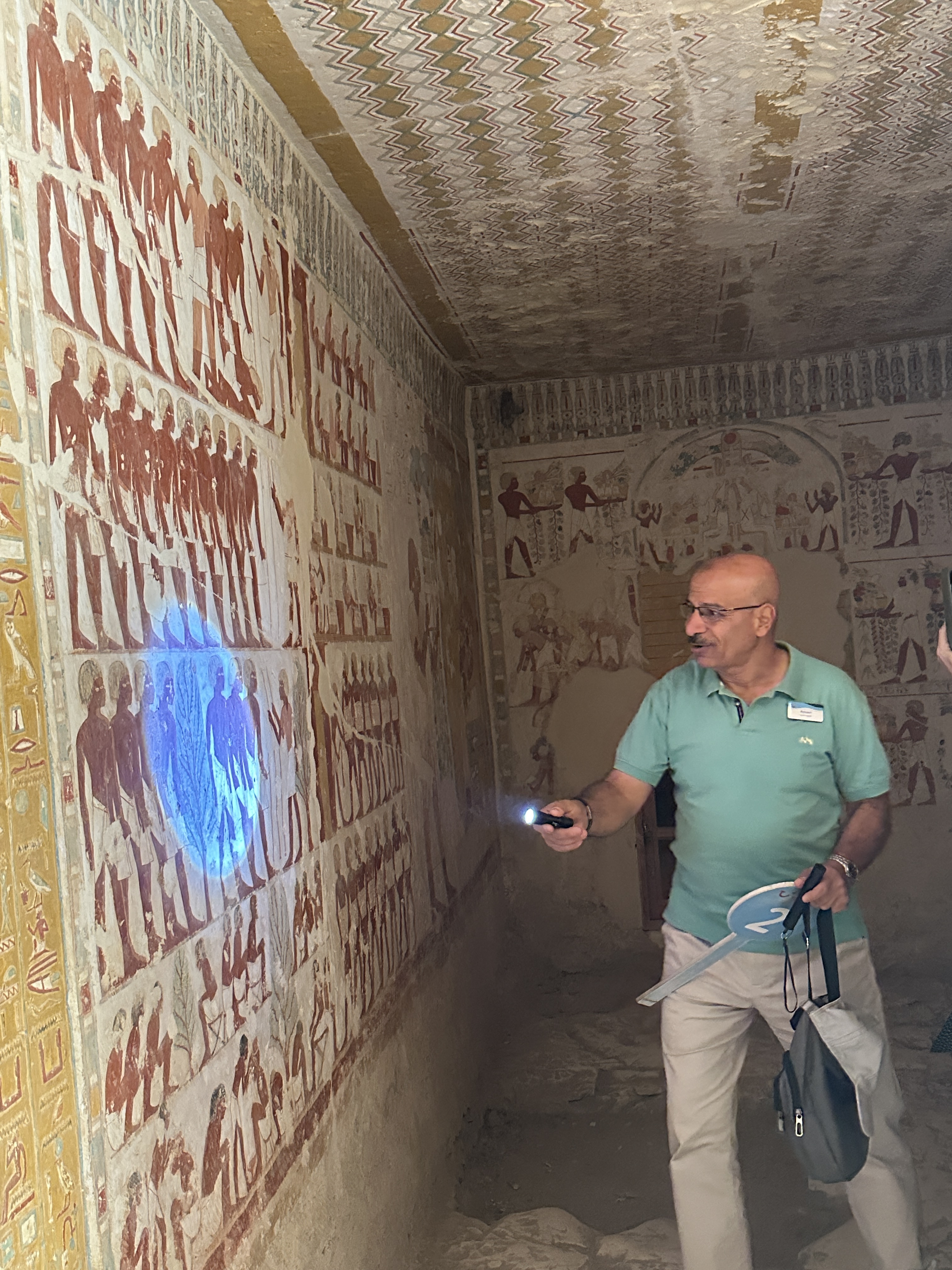
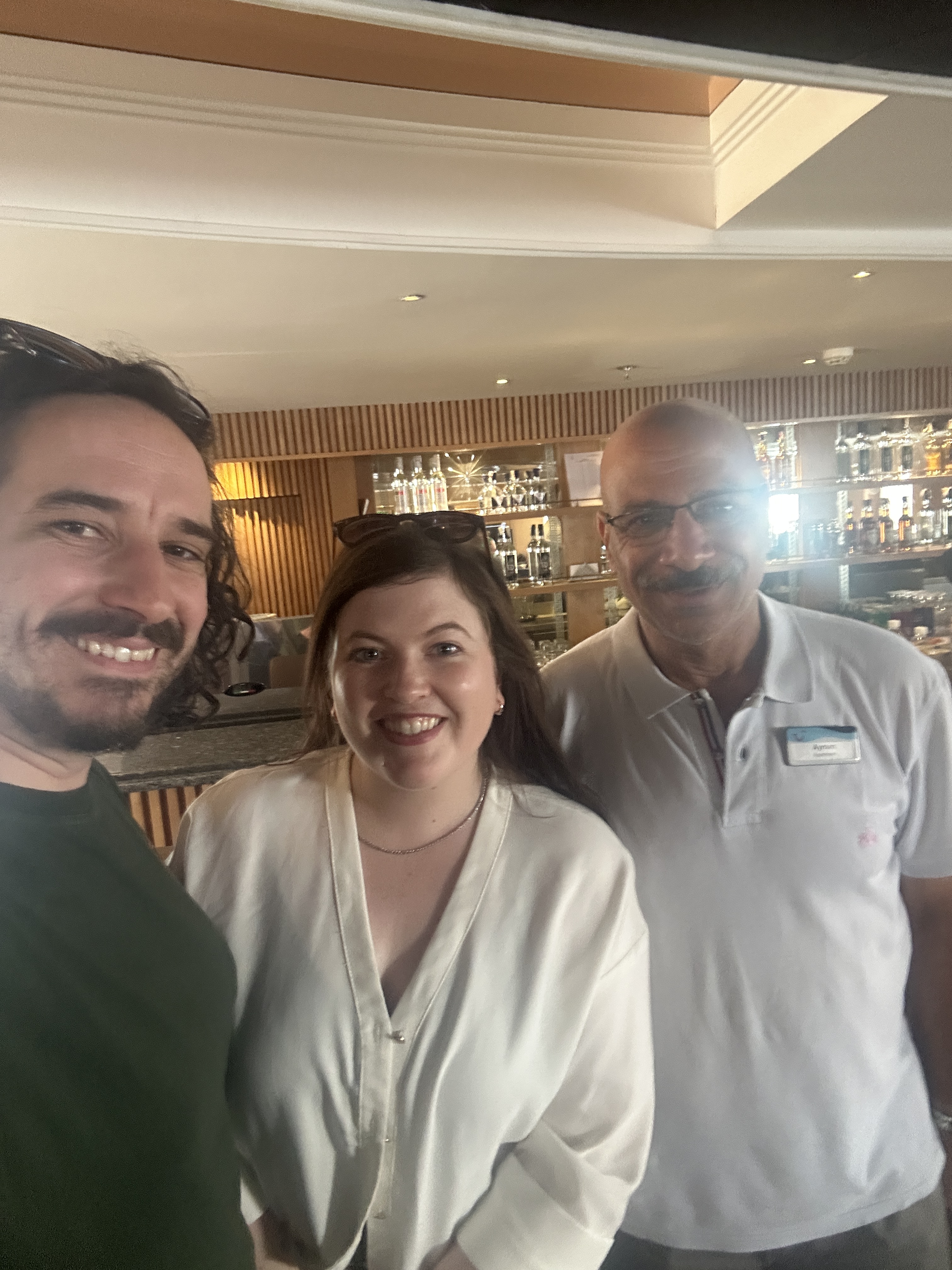
For five of our seven touring days we had the same guide, and I cannot overstate how much this made the trip. Ayman, an Egyptologist of thirty years originally from Alexandria, was eccentric, passionate, endlessly knowledgeable, and genuinely, brilliantly funny.
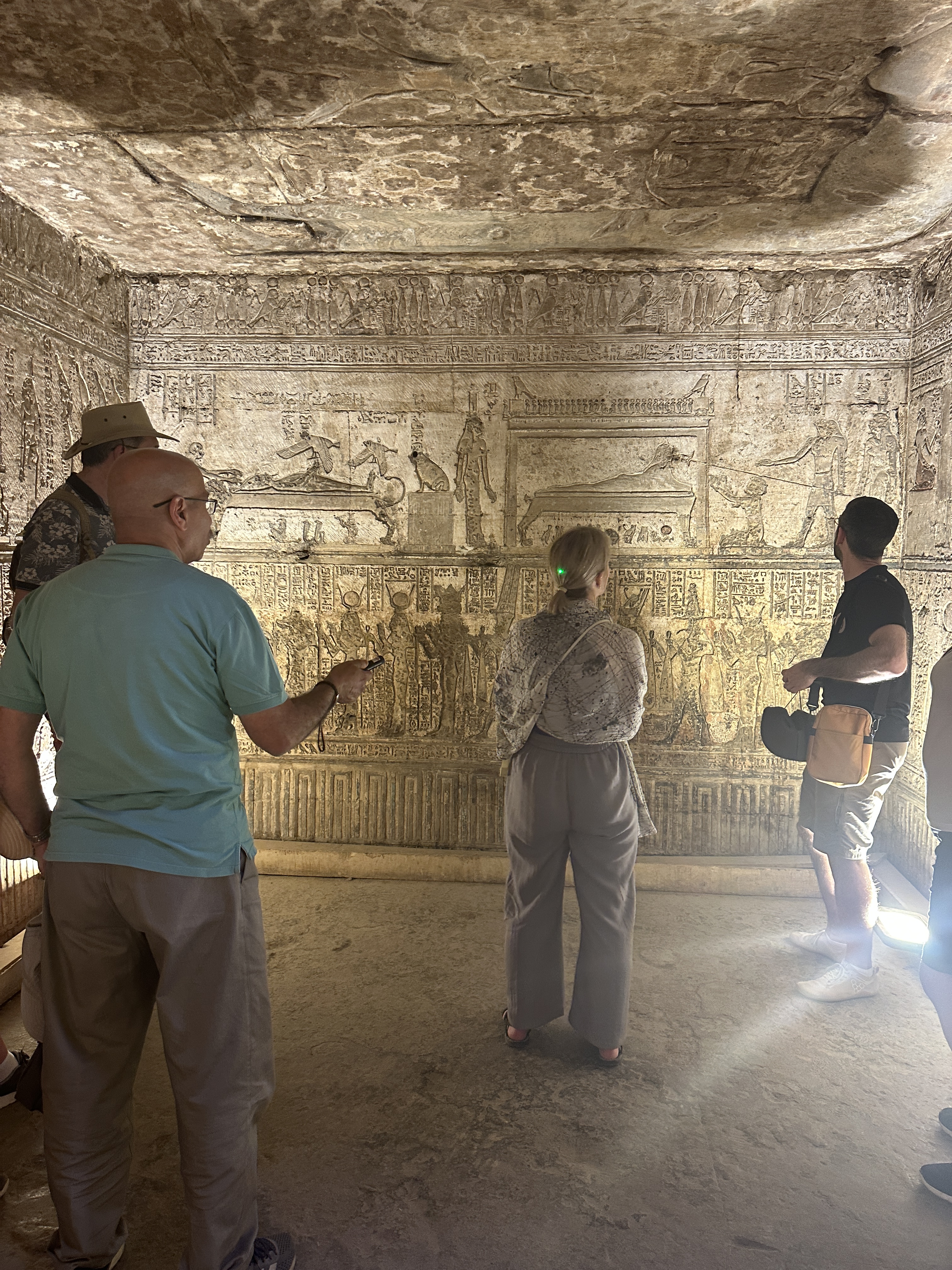
He carried a laser pointer which he used to illuminate carvings and hieroglyphics in the dim tomb corridors; occasionally he’d let it drift out into the crowd of tourists ahead of us, the little green dot dancing merrily across unsuspecting hats and shoulders. He had a gift for making even the most complex historical stories feel immediate and alive.
Day One: The Valley of the Kings, Hatshepsut and the Colossi of Memnon
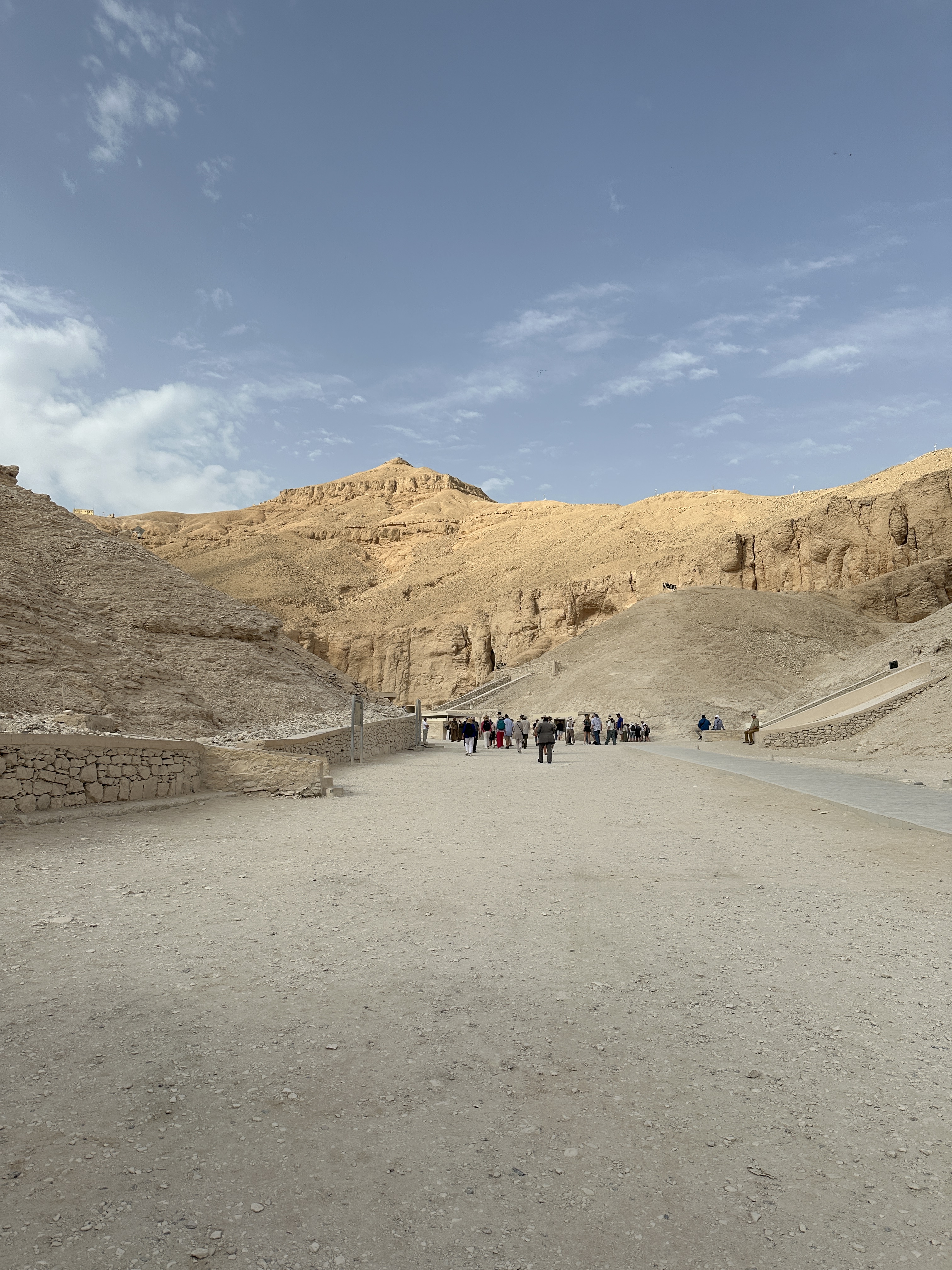
Our first touring day began with a golf cart ride from the entrance of the Valley of the Kings up towards the tombs. The driver was very cheerful, peppering us with phrases like ‘lovely jubbly’ in a way that suggested he’d learned his English from a very specific British television programme. The valley itself, ringed by bleached limestone cliffs that shimmer in the heat, is one of those places that stops you in your tracks even before you go underground.
Before visiting, I’ll confess I’d been slightly anxious about the trip, partly because of memories of being hassled by sellers on a childhood trip to Egypt. But, I needn’t have worried. The sellers, while present, were on the whole respectful and easy to navigate, a reflection, Ayman told us, of how much Egypt values its tourists, one of the country’s three main sources of revenue. If you’re someone who is worried about confined spaces, the tombs here are far more spacious inside than you might imagine, descending through wide painted corridors rather than squeezing through narrow passages.
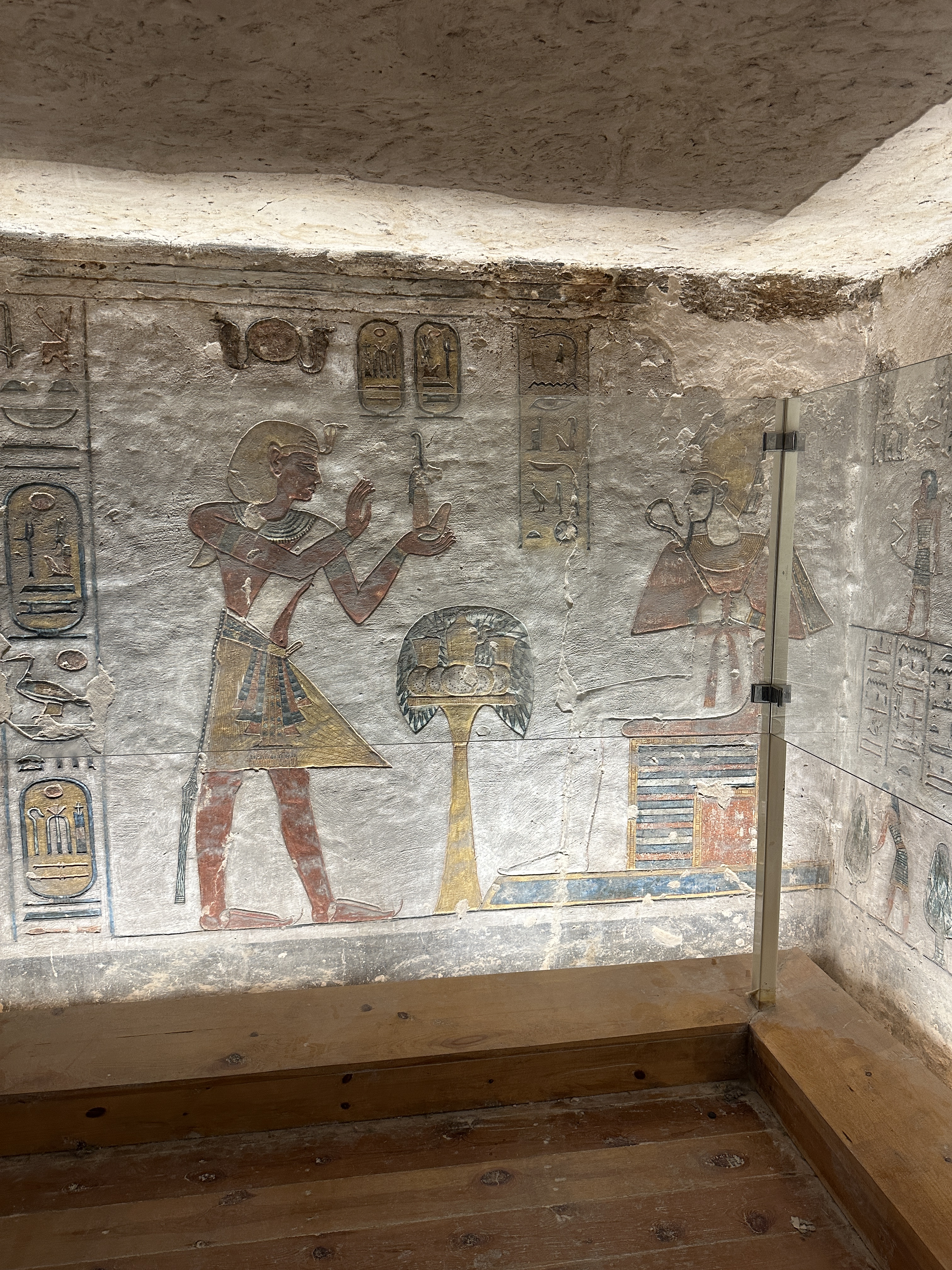
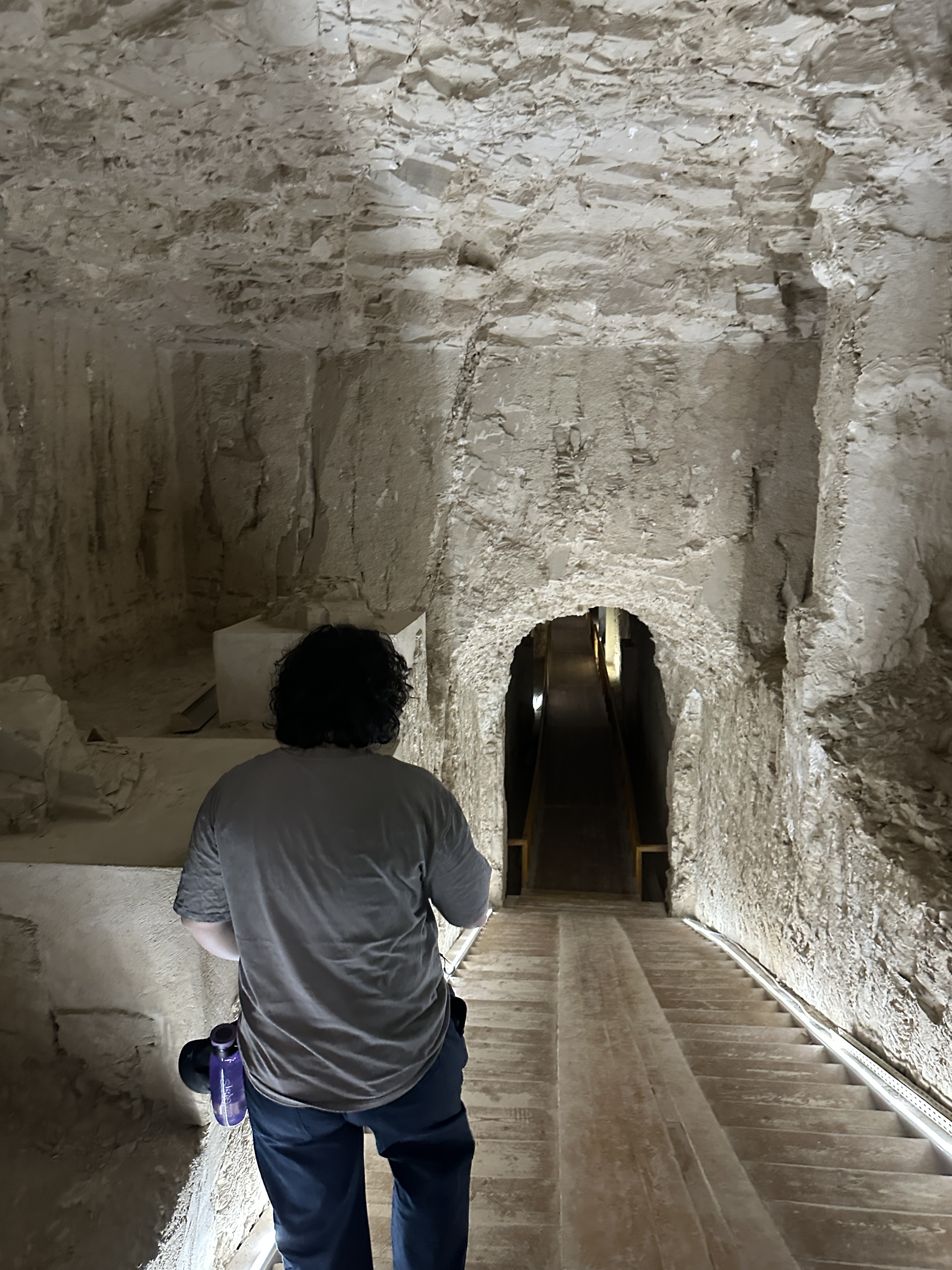
We visited KV11 (Ramesses III), KV14 (the double tomb of Tausert and Setnakht) and KV47 (Siptah). A note for anyone planning the same trip: the standard ticket covers three tombs, but Tutankhamun’s requires a separate additional ticket. We didn’t realise this until we were already there and were a bit gutted to miss it (but it does give us an excuse to come back).
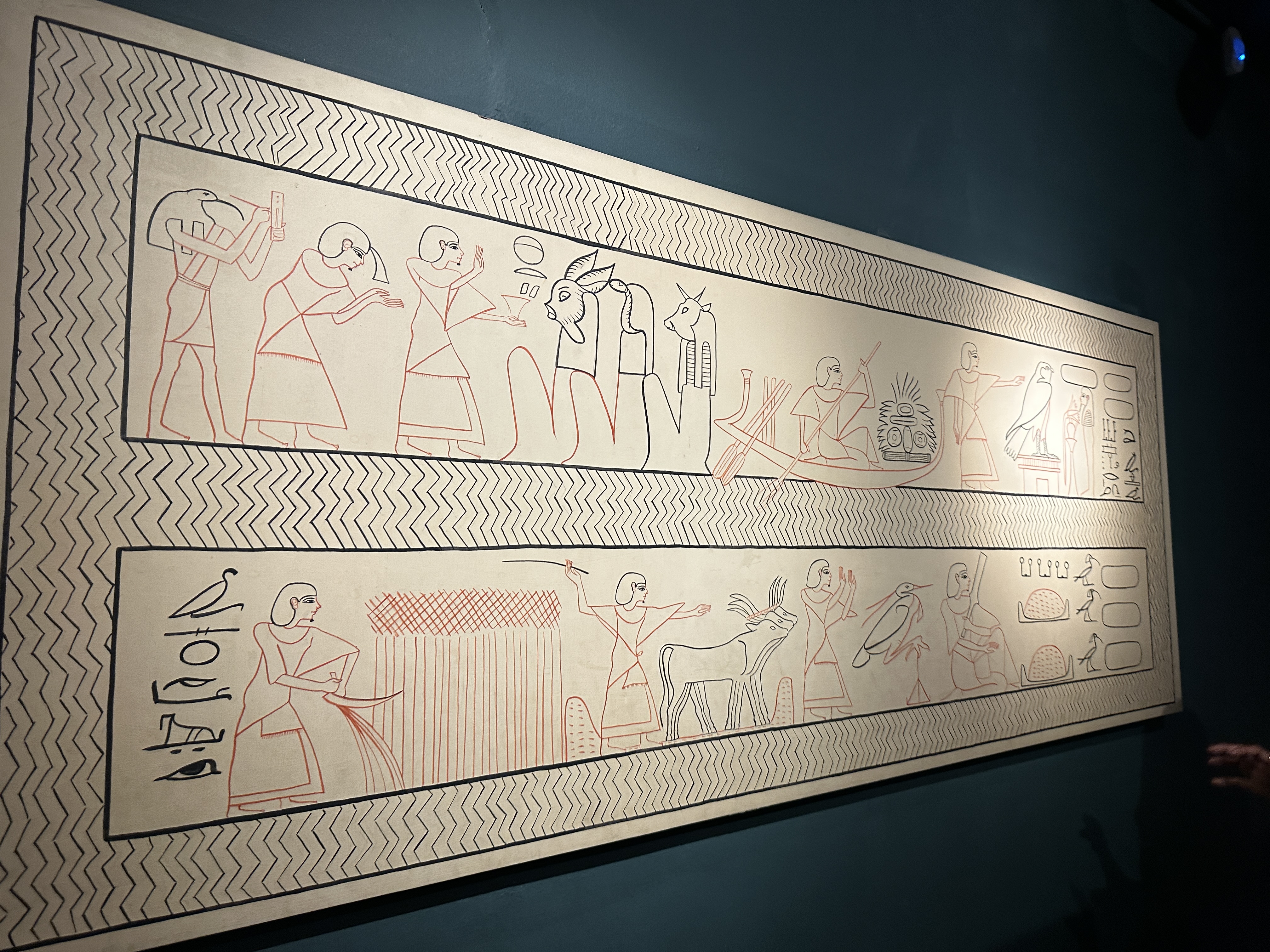
Because we were visiting during Ramadan, with Eid falling partway through our trip, the crowds were lighter than usual. In KV14 and KV47, we found ourselves virtually alone with a couple from our ship. Standing in a 3,200-year-old burial chamber with barely another soul around, surrounded by paintings that still held their colour, deep blues that have outlasted almost everything else around them, was something I won’t forget. We were told that the blue paint was made by grounded up turquoise stone and also from producing a mixture of certain chemicals. Despite a lot of the colour being faded, you could still see the evidence of the blue paint on most walls.
After visiting the Valley, we stopped at a pottery workshop where artisans demonstrated their craft with an entertaining theatric performance. The shop itself was spectacular: an enormous backlit onyx column glowing amber at its centre, shelves of vases and figurines arranged around it. No pressure to buy, and we didn’t, but I didn’t begrudge the stop for a moment.
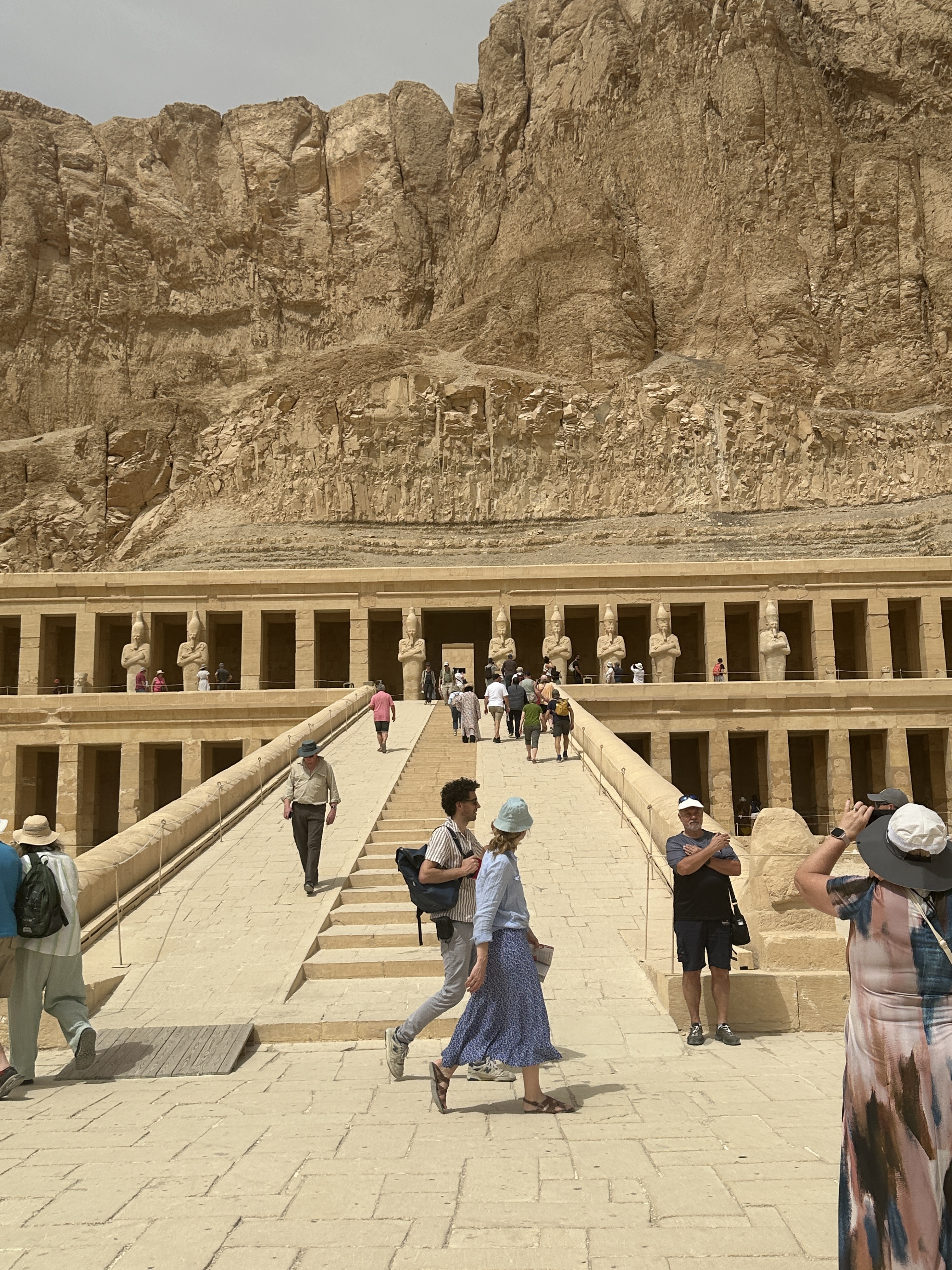
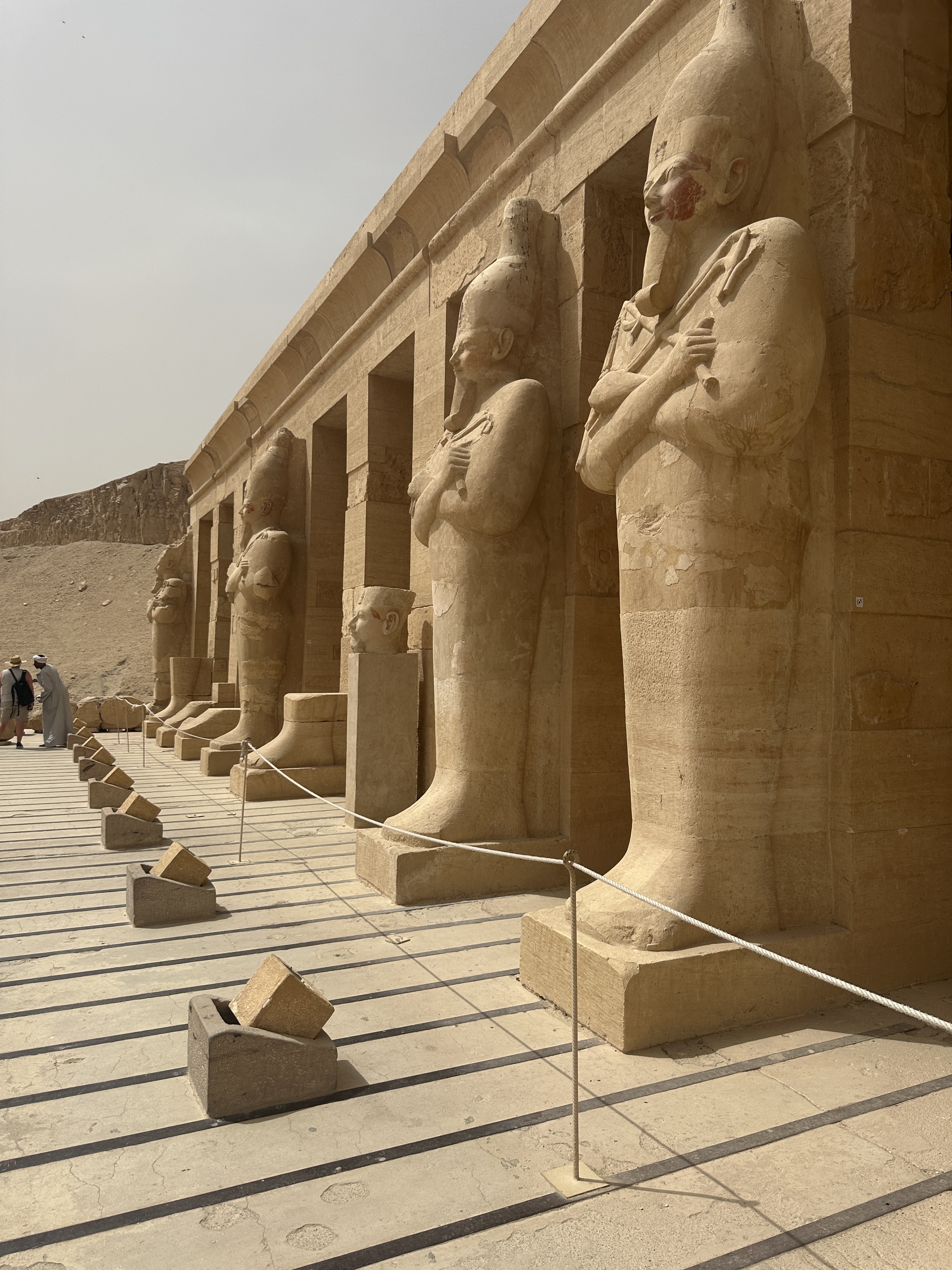
Hatshepsut’s mortuary temple, carved into the sheer cliffs of Deir el-Bahari, was my personal highlight of the entire first day. Ayman brought the story of Egypt’s great female pharaoh to vivid life: how she ruled as co-regent alongside the young Thutmose III, wore the ceremonial false beard, and built one of the most extraordinary monuments in the ancient world. After her death, Thutmose III systematically attempted to erase her from history, chiselling her name from cartouches and destroying her image. Ayman used an analogy that stuck with me: a cartouche is like your two forms of ID, passport and driving licence combined. Destroy it and you destroy a person’s identity entirely, wiping them from existence. It almost worked. But not quite. Some of Hatshepsut’s images survived, hidden by sand and time, and she endured. On the day we visited, a sandstorm was brewing over the desert, and standing in that ochre haze looking up at the great Osiride statues with their arms crossed over their chests, I felt the full, ancient weight of her story.
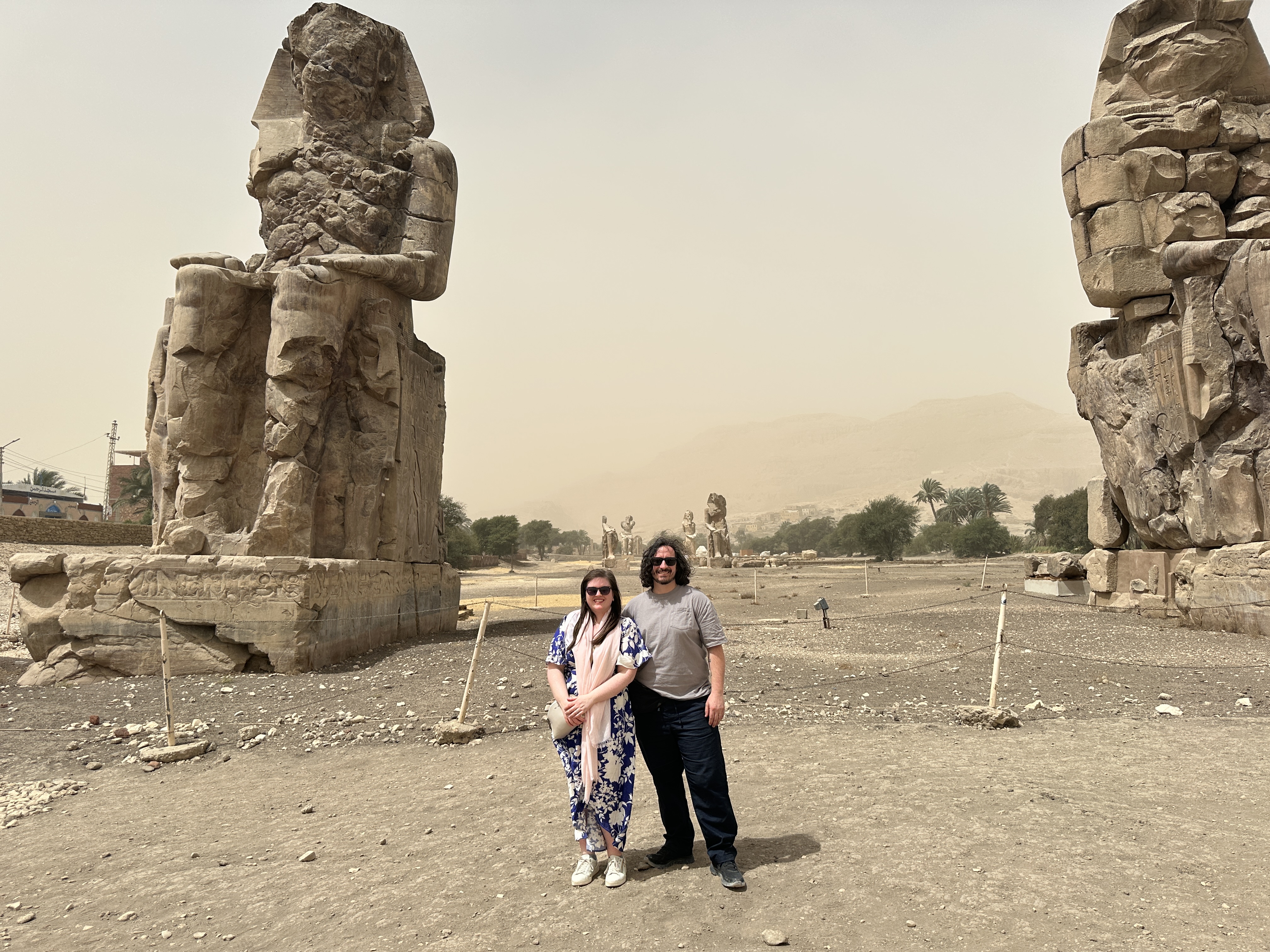
The Colossi of Memnon was not originally on the itinerary. Ayman arranged a quick stop as we drove back. Two seated figures of Amenhotep III, each around 60 feet tall, rising out of the desert plain like a vision. Someone from our group offered to take our photograph. We looked like ants next to the two ancient giants either side of us and with the sandstorm blurring the horizon behind. I found myself thinking, as I would many times that week, about the sheer human effort that went into building all of this. The sweat and ingenuity and labour of people who lived three thousand years ago. You feel very small, and very grateful.
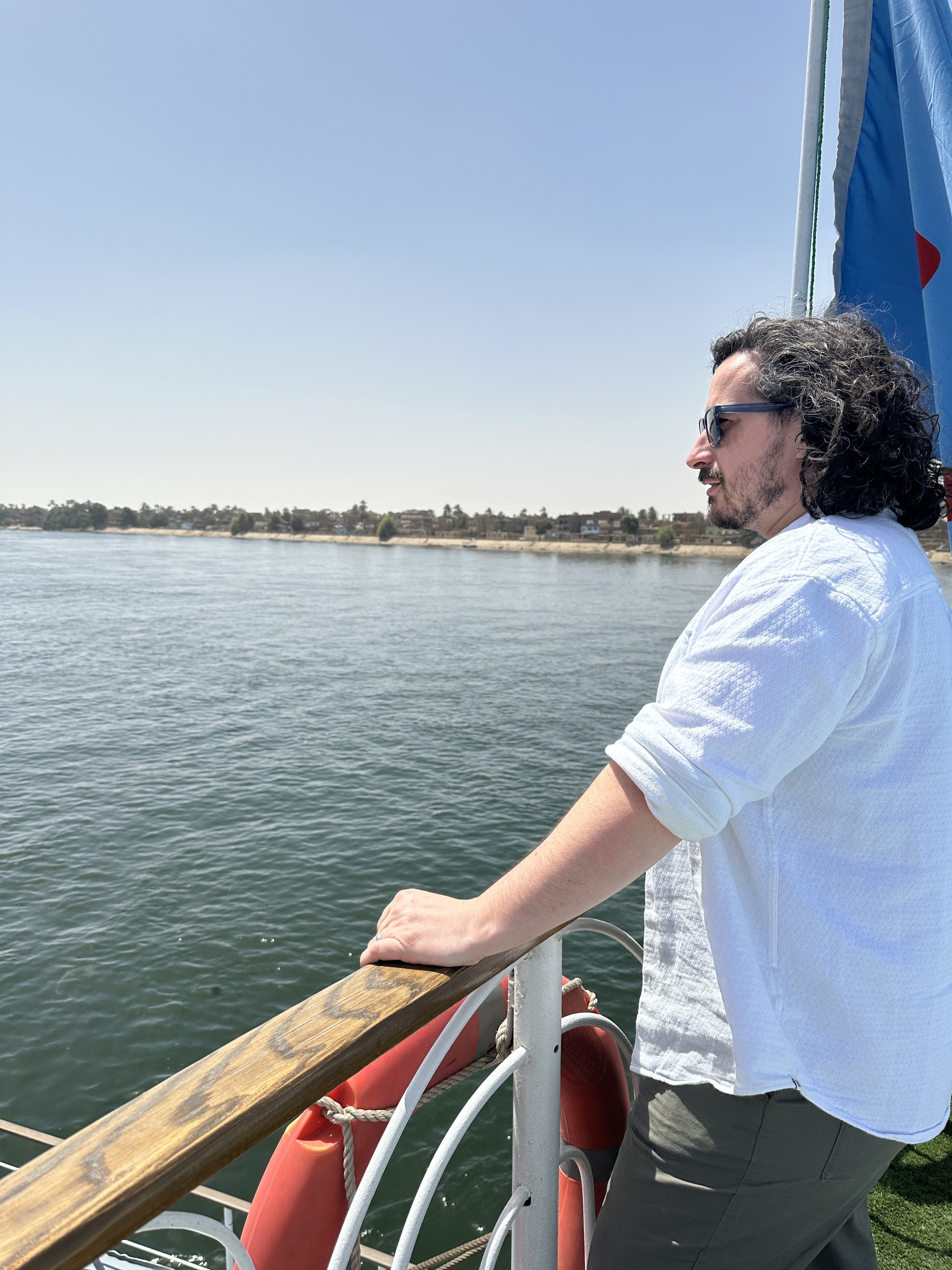
Day one ended on the water. A sandstorm had made sailing impractical, so we scrambled into a motorboat. Health and safety, as we quickly learned, operates somewhat differently in Egypt, and we headed back to the Al Horaya with the warm wind in our hair and Rob’s long curly locks whipping magnificently across his face. As we pulled up to the gangway, a heron was waiting on the wooden platform, utterly unbothered. It felt like a welcome home.
Day Two: The Valley of the Nobles, Medinet Habu and the Ramesseum
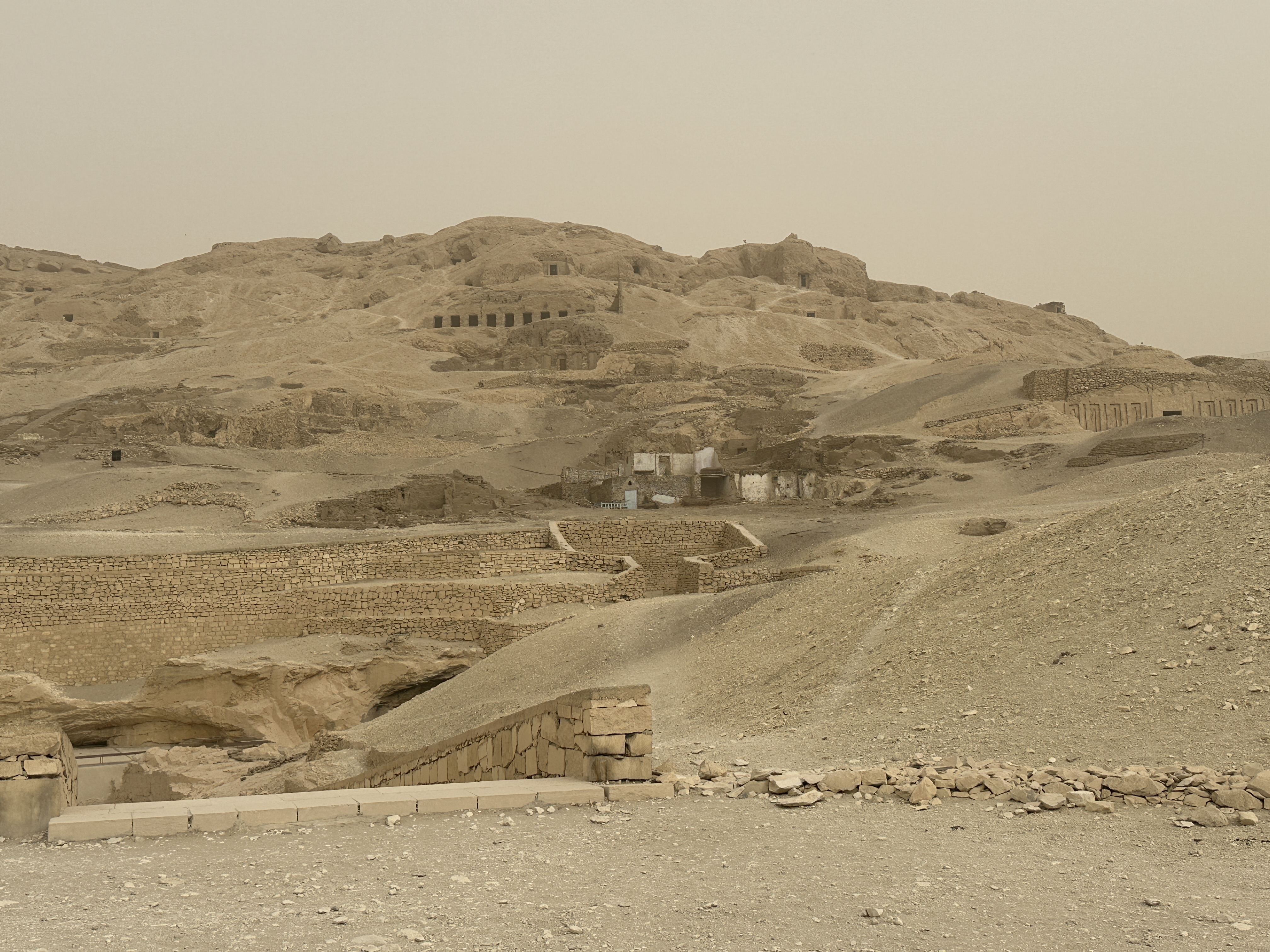
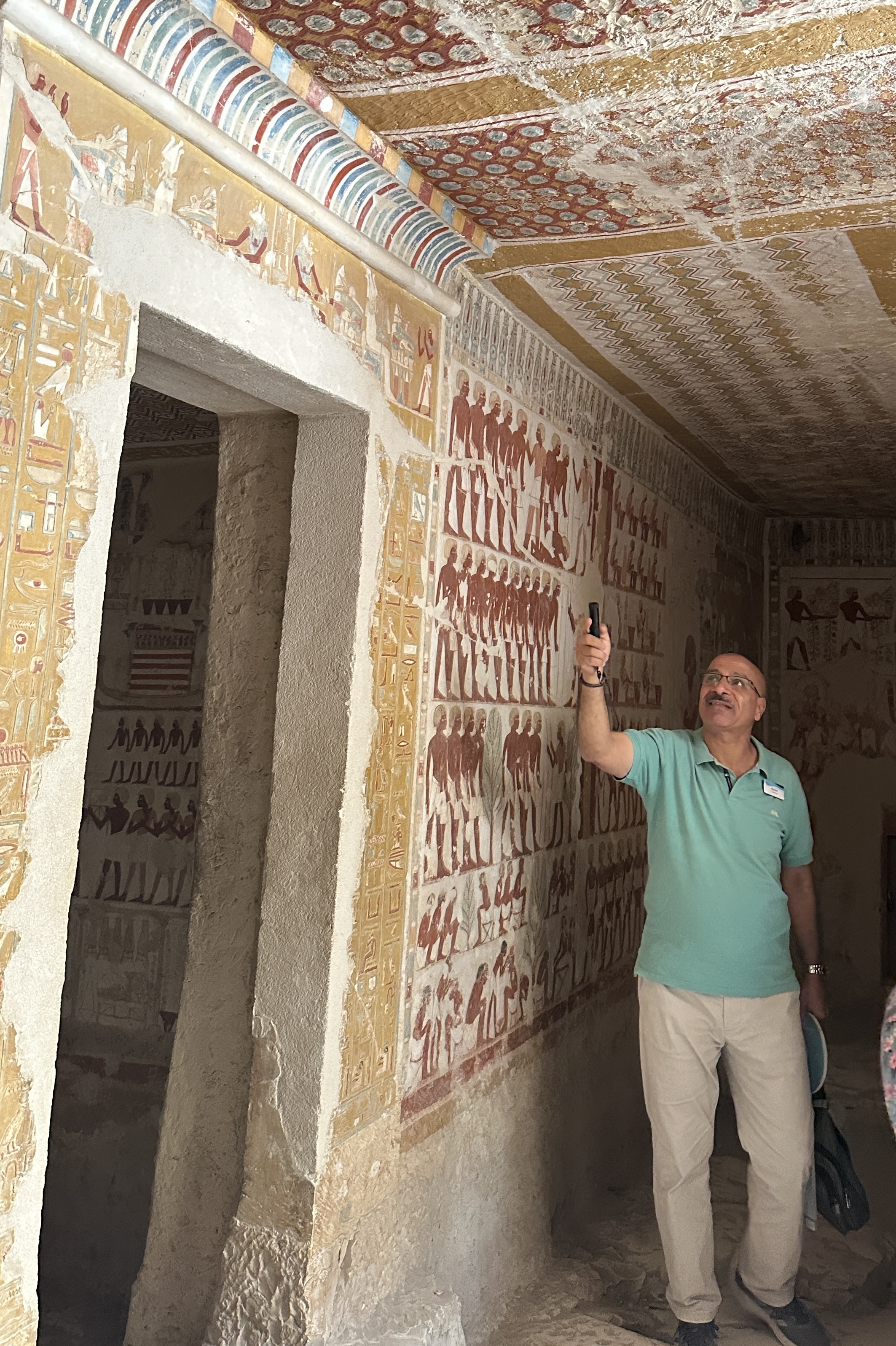
We were the only group at the Valley of the Nobles when we arrived, which felt like an extraordinary privilege. Inside the tomb of Userhat, a royal scribe and counter of bread under Amenhotep II, Ayman told us that bread in ancient Egypt was not merely food but a symbol of life itself, woven into the hieroglyphics on every wall. You begin to understand, over a week like this, how completely interwoven daily existence and the divine were in ancient Egyptian culture.
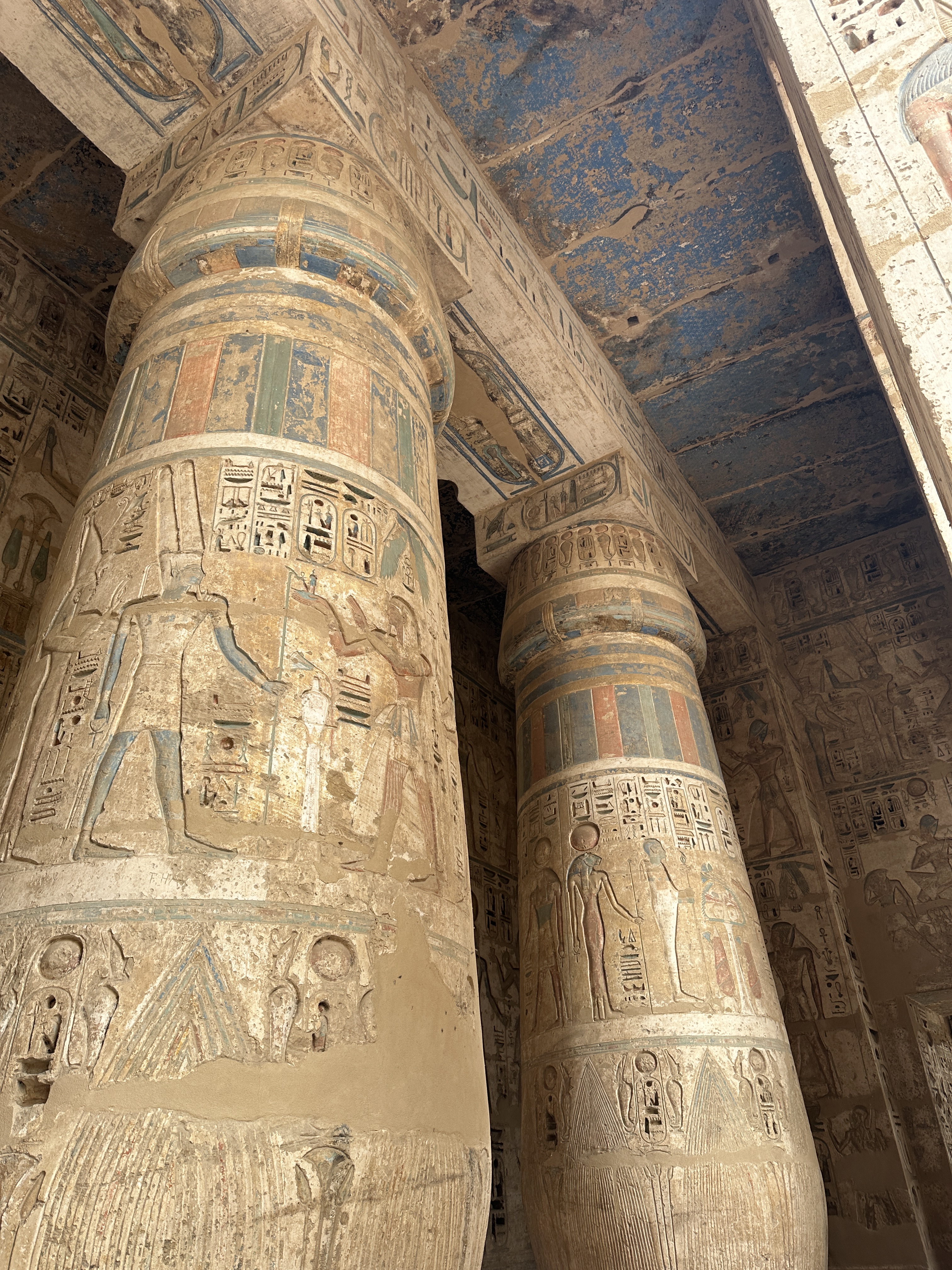
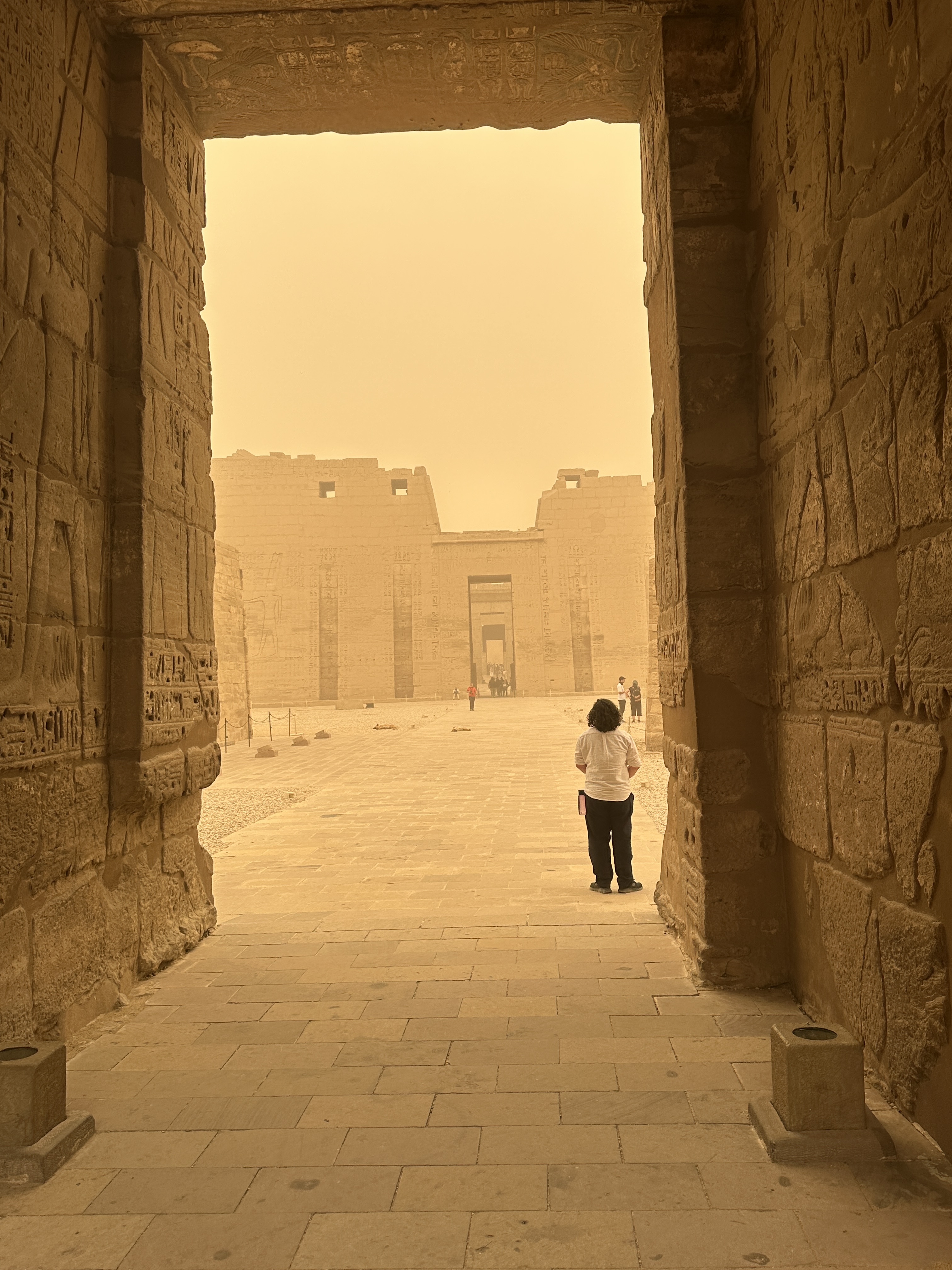
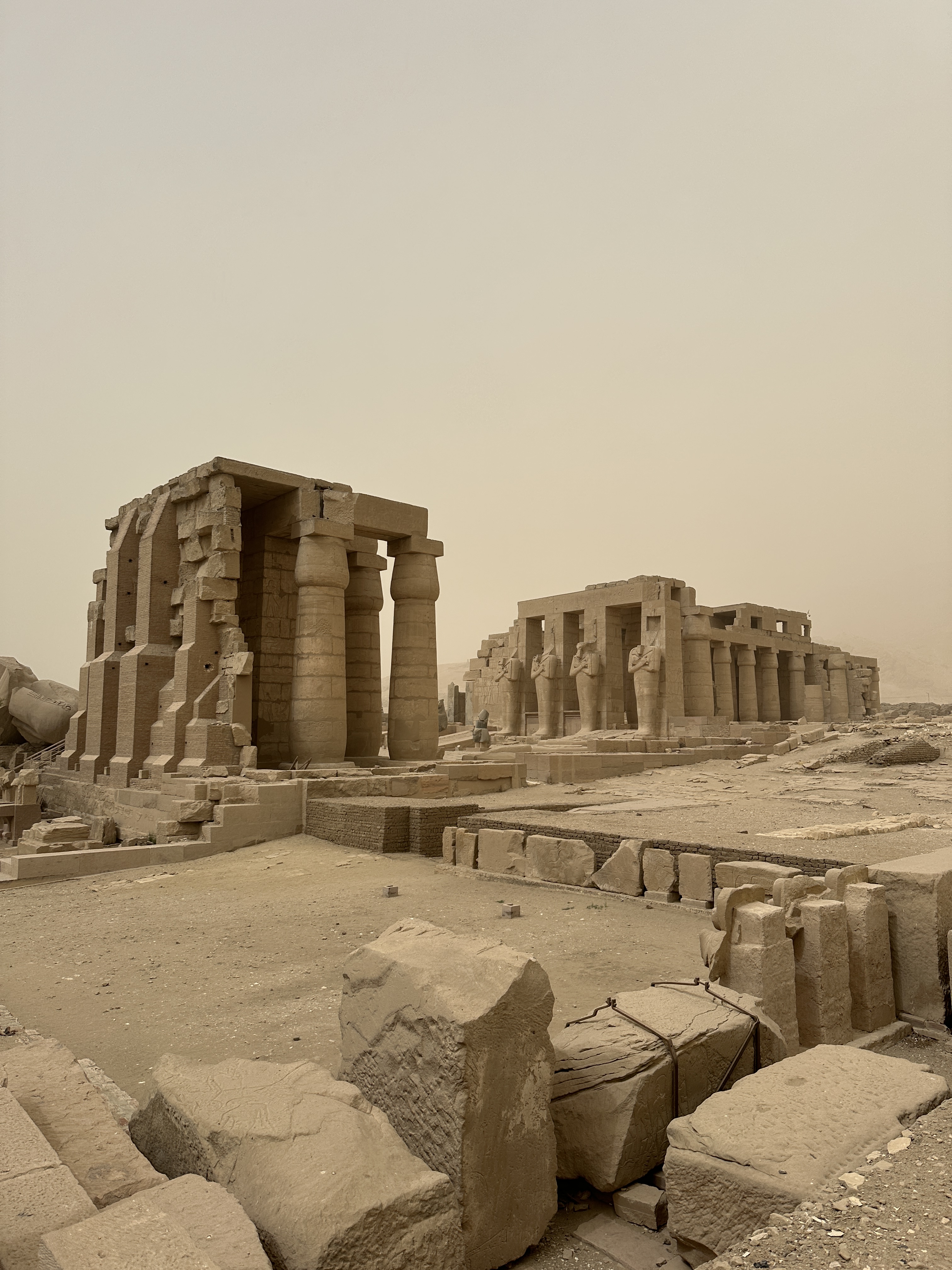
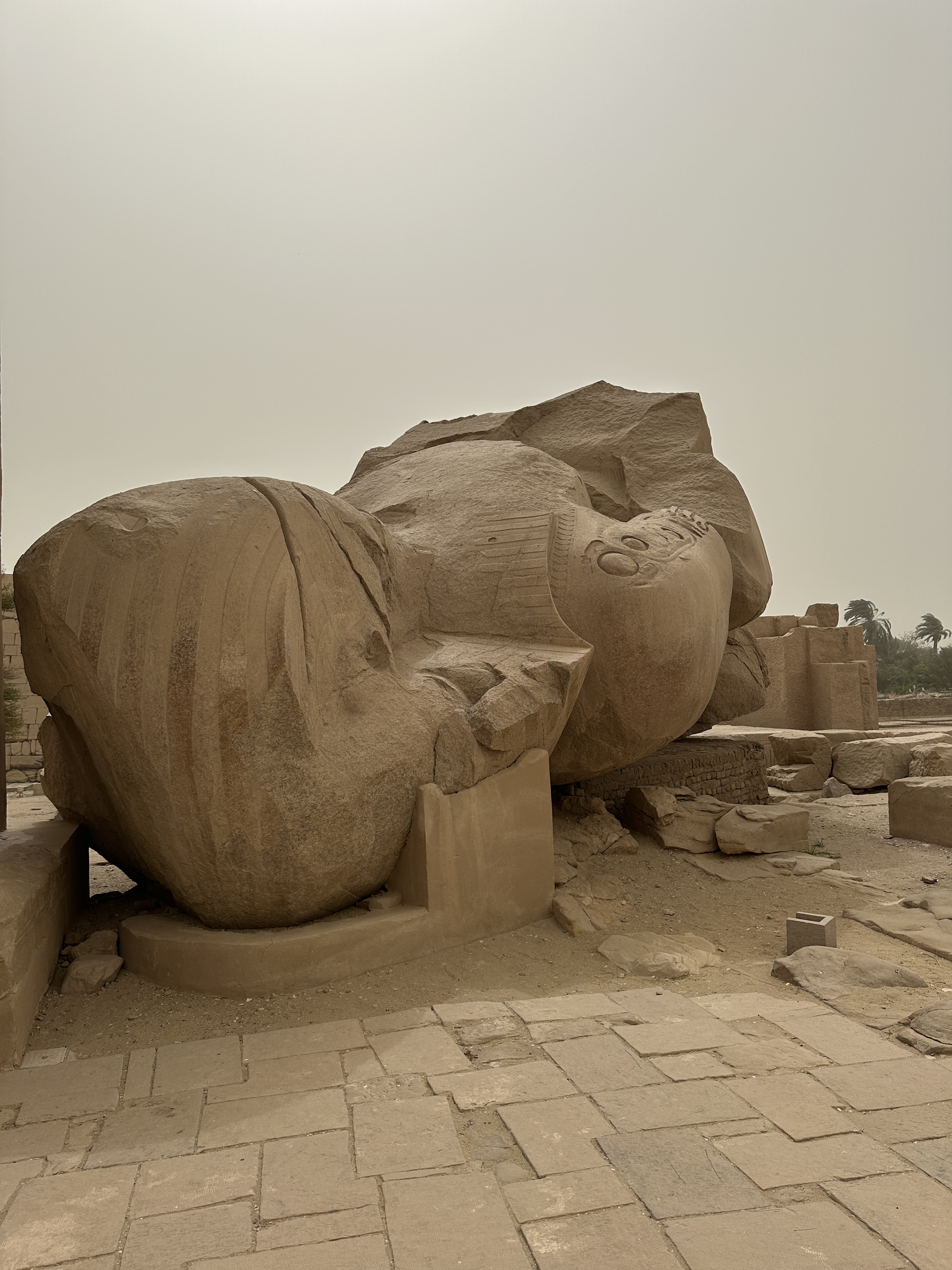
Medinet Habu, the mortuary temple of Ramesses III, and the Ramesseum both impressed enormously. The sandstorm that had been gathering since the previous day turned the sky a deep amber, giving everything a slightly apocalyptic grandeur. The enormous fallen colossus at the Ramesseum is one of the most haunting sights in Egypt: the shattered remains of Ramesses II’s statue, lying in the dust. It weighs around a thousand tonnes, which is why the European collectors who coveted it in the 19th century couldn’t move it.
Speaking of European visitors: throughout the temples, Ayman pointed out carved graffiti left by 19th-century explorers, their names and dates scratched casually into the ancient stone. It provokes a complicated feeling, a kind of cringing embarrassment at the casual vandalism, combined with a wonder at what it must have felt like to be among the first westerners to stand in these places. The hieroglyphics and the Victorian handwriting side by side, each telling a story about the people who left them.
Day Three: Edfu, Eid and Kom Ombo by night
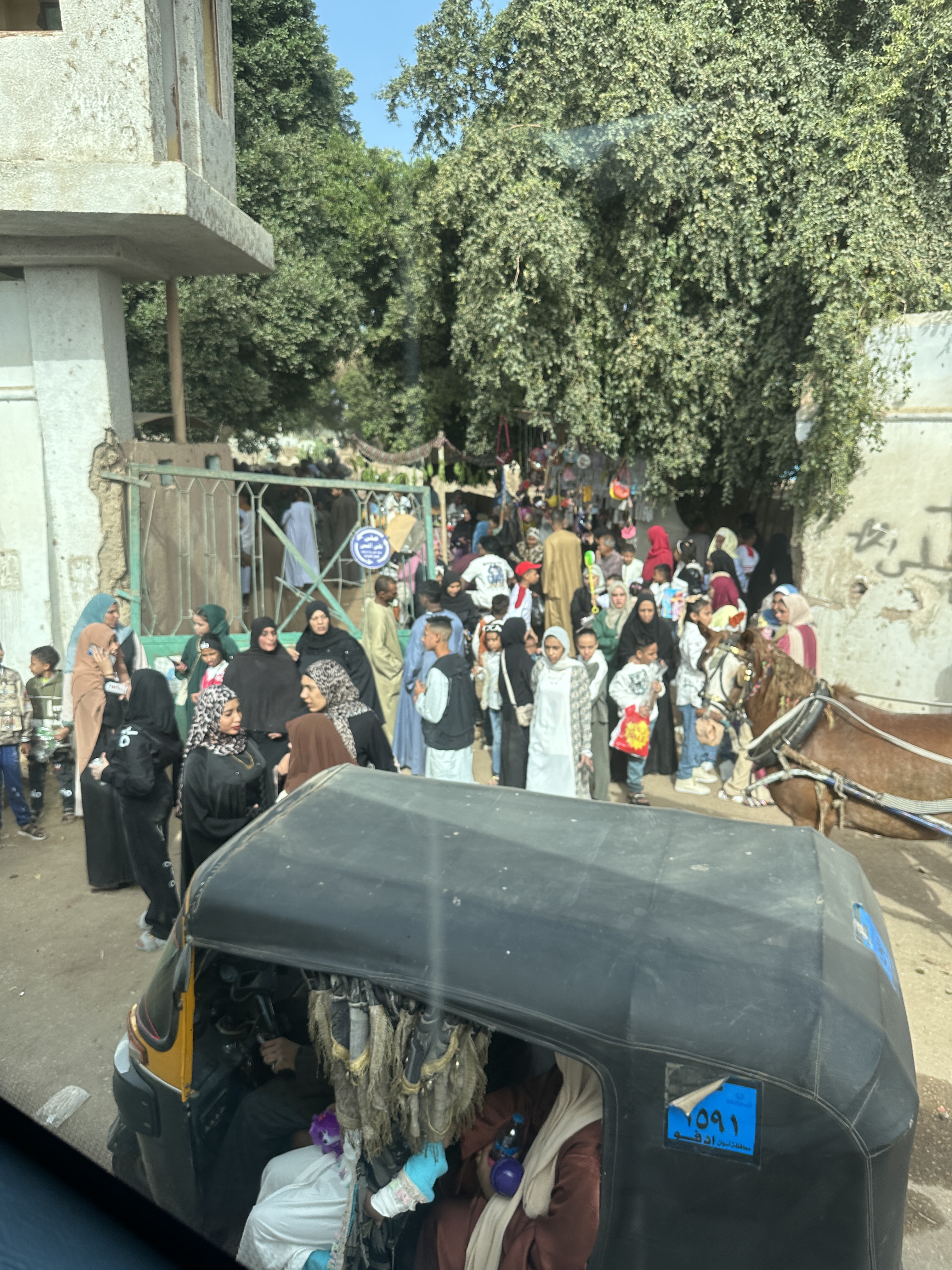
Day three was also the start of Eid al-Fitr, the celebration marking the end of Ramadan. As our coach made its way through the streets to the Temple of Horus at Edfu, the world outside the window was transformed: families out in their finest clothes, children clutching bags of sweets and small toys, market stalls strung with decorations under shady trees, a tuk-tuk threading through the crowds, and several horse and carts. Children and their parents waved at us as we drove by on our coach.
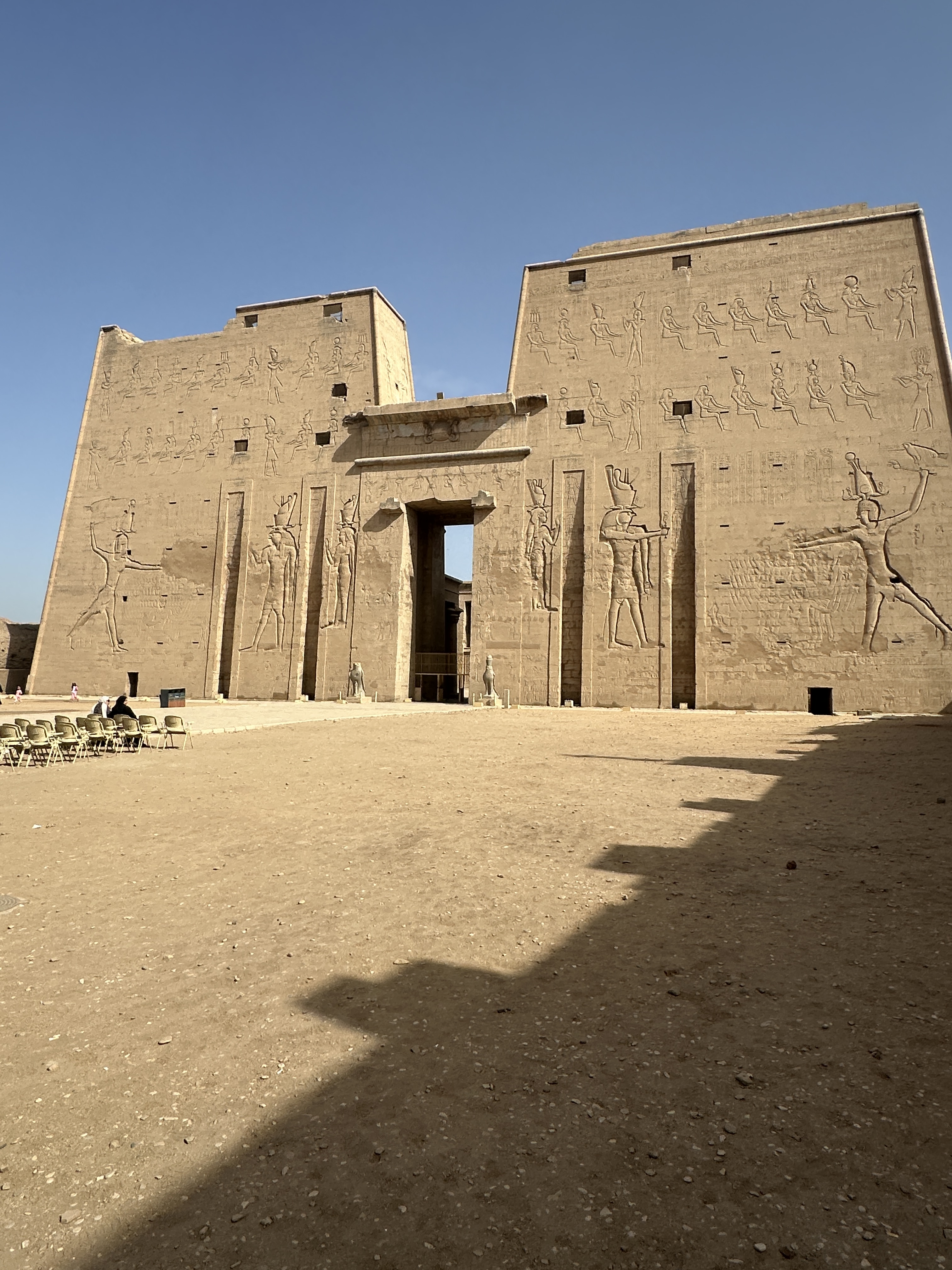
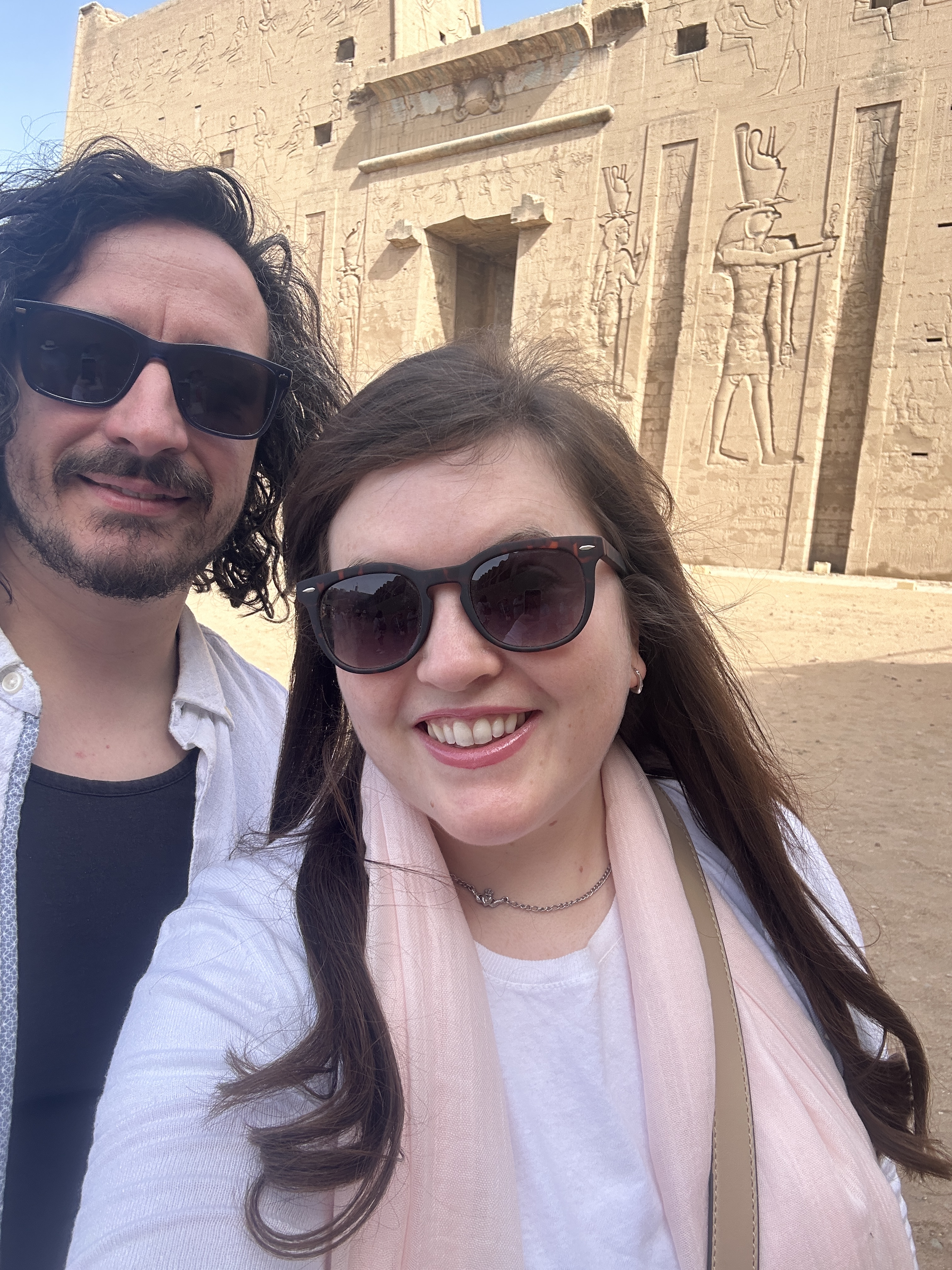
The Temple of Horus at Edfu is the best-preserved temple in Egypt, thanks to it being buried under 12 metre of sand for centuries until its excavation in the 19th century. Surrounded by the walls of the temple, Ayman chose to tell us the story of Isis and Osiris, and rather than simply narrating it, he cast members of our group as the characters. Rob became Osiris. I became Isis. Ayman cast himself as the father figure, which felt entirely appropriate. The tale he told, of jealousy, murder, dismemberment, resurrection and divine conception, is frankly more dramatic than anything on television, and Ayman told it with the timing of a natural comedian.
That afternoon, the ship began its journey south. There’s something about being on the Nile, watching the riverbanks slide past, the desert on one side and the fertile strip on the other, the water a deep blue-green, that puts everything into perspective. These are the same banks that sustained one of the greatest civilisations the world has ever known.
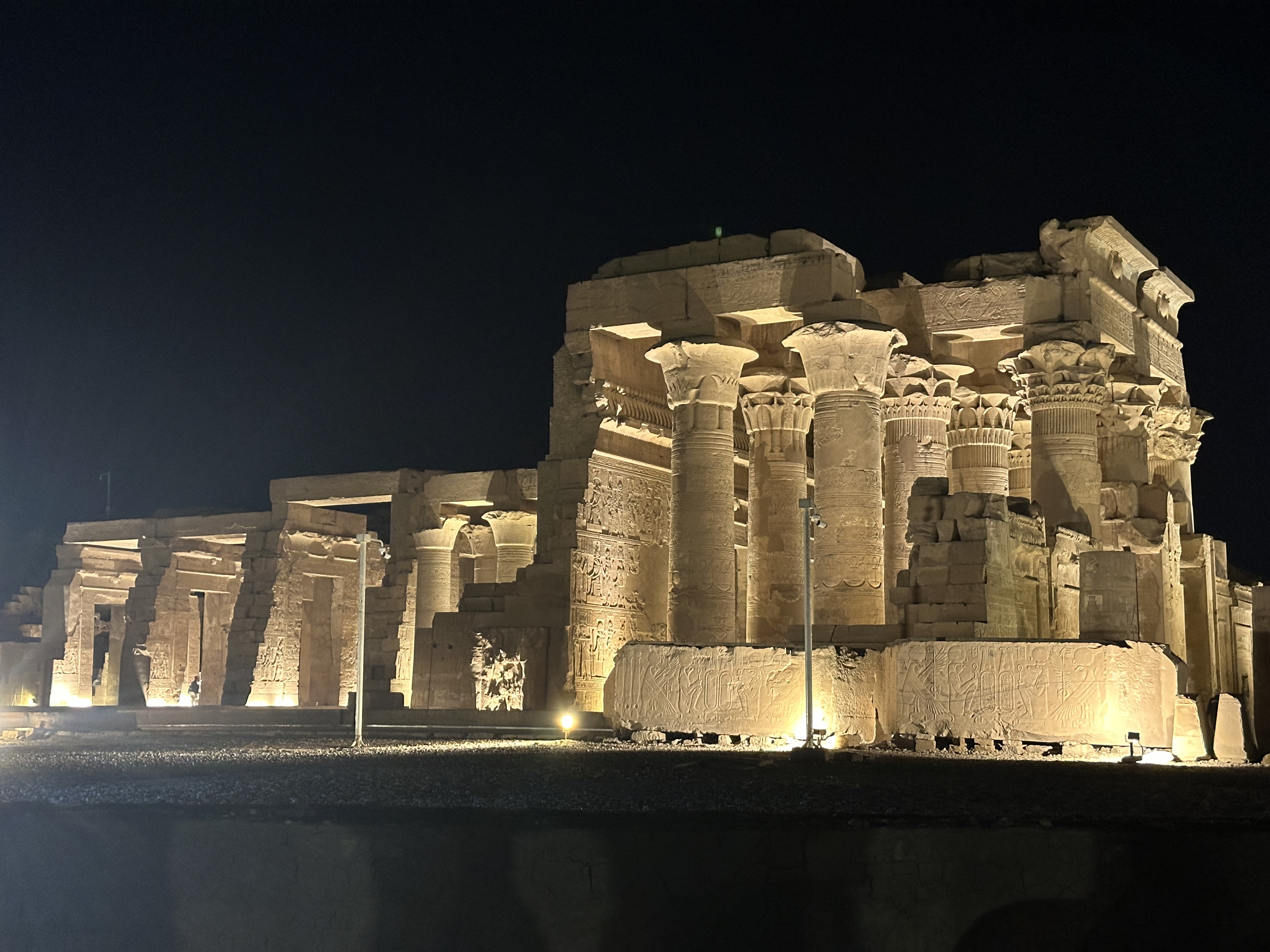
That evening, TUI laid on a second free excursion: Kom Ombo, the remarkable double temple dedicated to both the crocodile god Sobek and the falcon god Haroeris. Visiting at night, with the columns lit from below against an ink-black sky, was one of the most atmospheric experiences of the week. Ayman delivered his verdict on ancient Egyptian religion with characteristic directness: ‘It was a religion of liars and manipulators,’ he announced, then explained how priests would hide in concealed chambers to speak in booming voices to worshippers who believed they were receiving divine guidance. He illustrated this with a story about a man whose wife was in labour, dispatched by the ‘gods’ on increasingly elaborate errands, fetching eggs, gathering herbs, until the baby had safely arrived by the time he returned, convinced his prayers had been answered.
The Crocodile Museum next door to the temple contains actual mummified crocodiles: enormous, dark, surprisingly intact, laid out on sand behind glass. Sacred to Sobek, they were treated in death with the same reverence as the pharaohs whose temples they inhabited. On Eid evening, in the warm Egyptian night, it was a fittingly strange and wonderful end to an extraordinary day.
Day Four: Aswan, the Dam, the Obelisk and the Island of Philae
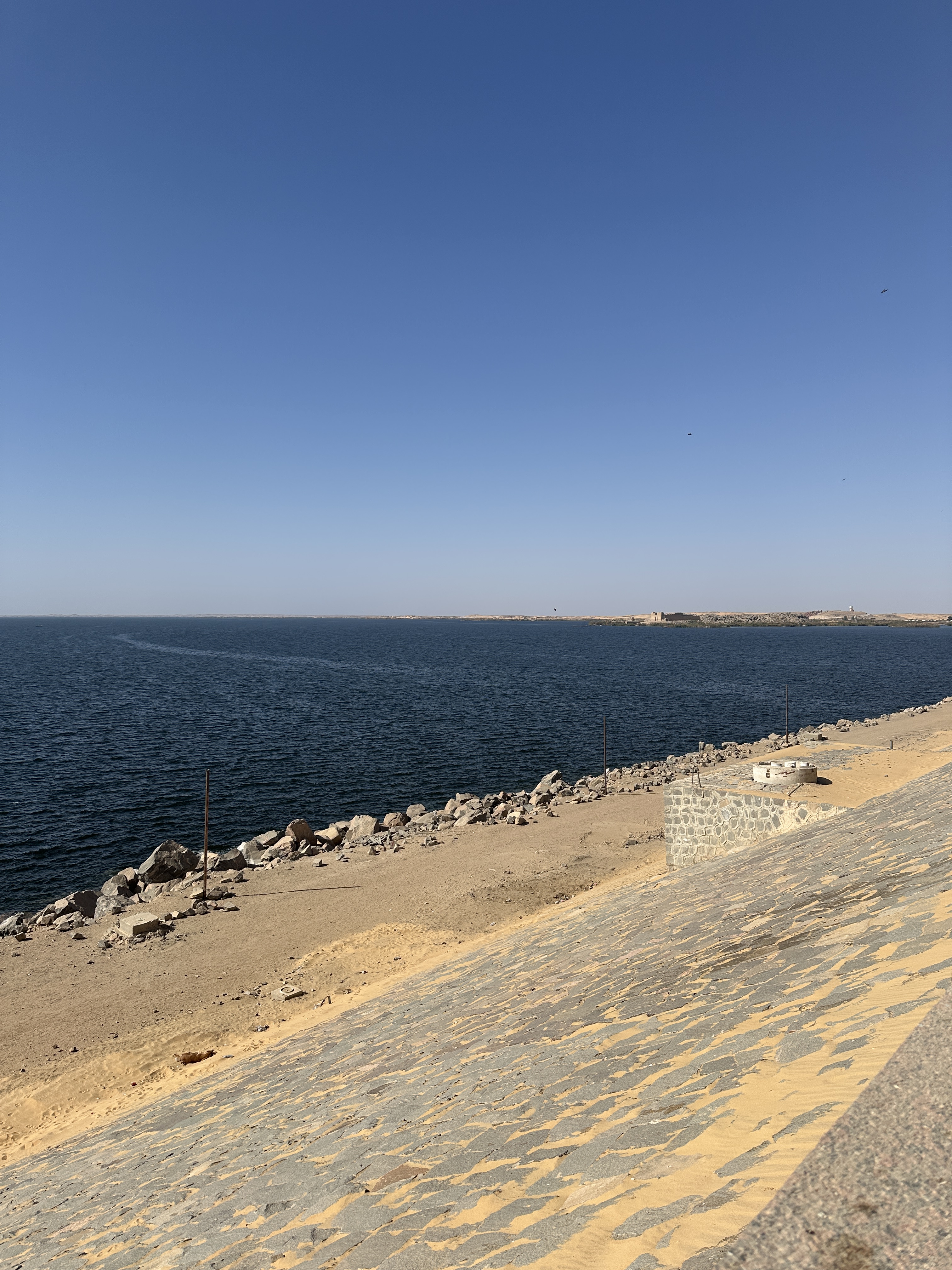
The Aswan High Dam is an extraordinary feat of 20th-century engineering, and standing on it, looking out over the vast blue ribbon of the Nile stretching away to the horizon, you feel the weight of what was achieved here. But Ayman made sure we understood the full picture: the dam’s construction displaced around 100,000 Nubian people from their ancestral homelands, which were flooded to create Lake Nasser. We would meet some of their descendants the following day.
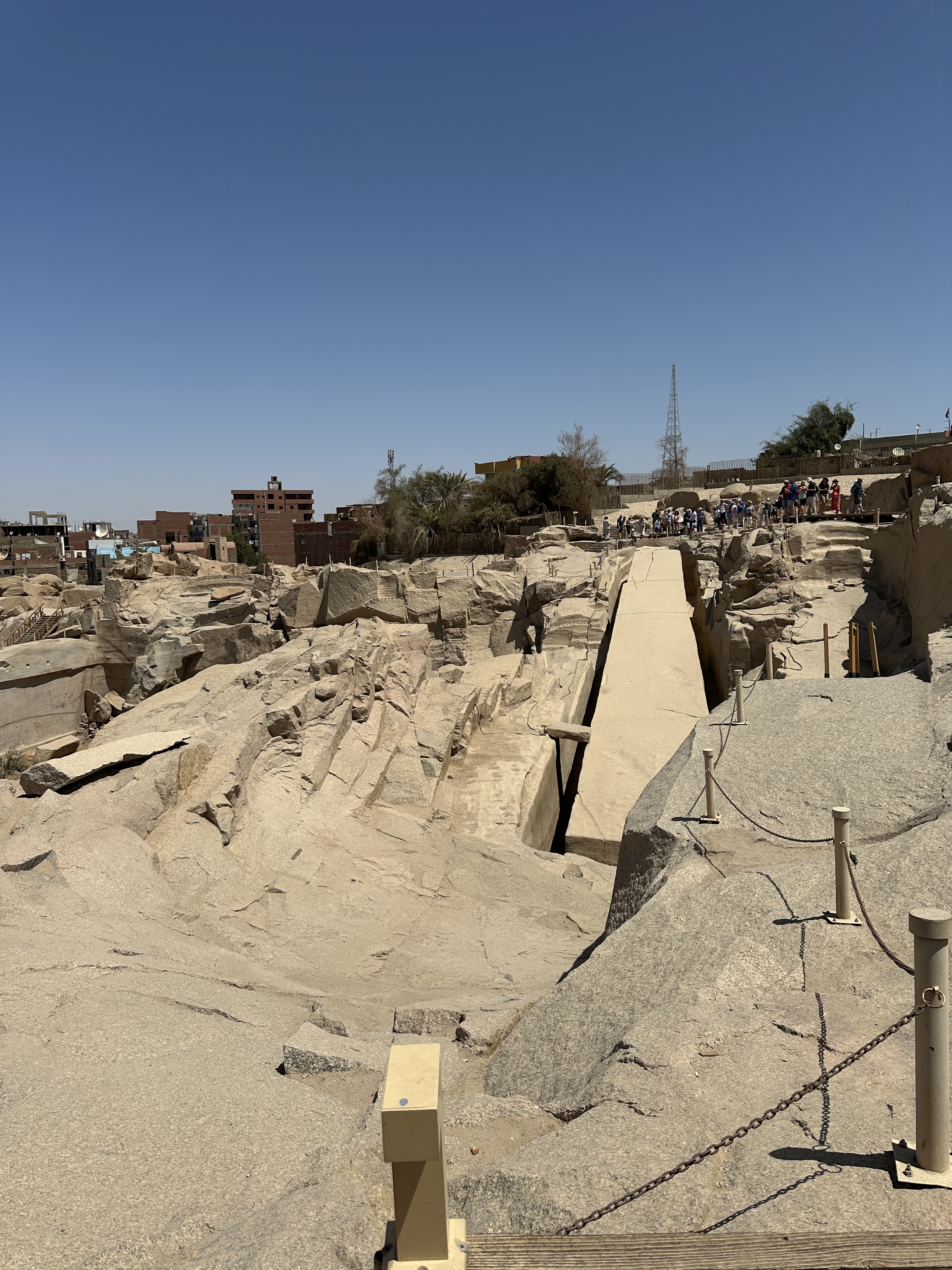
The Unfinished Obelisk, lying in its ancient granite quarry, is not the most dramatic sight on the itinerary, but it might be the most thought-provoking. Here, abandoned perhaps 3,500 years ago when a crack was discovered in the stone, lies what would have been the largest obelisk ever erected. The quarry around it reveals the marks of ancient tools, the channels cut by hand into solid granite.
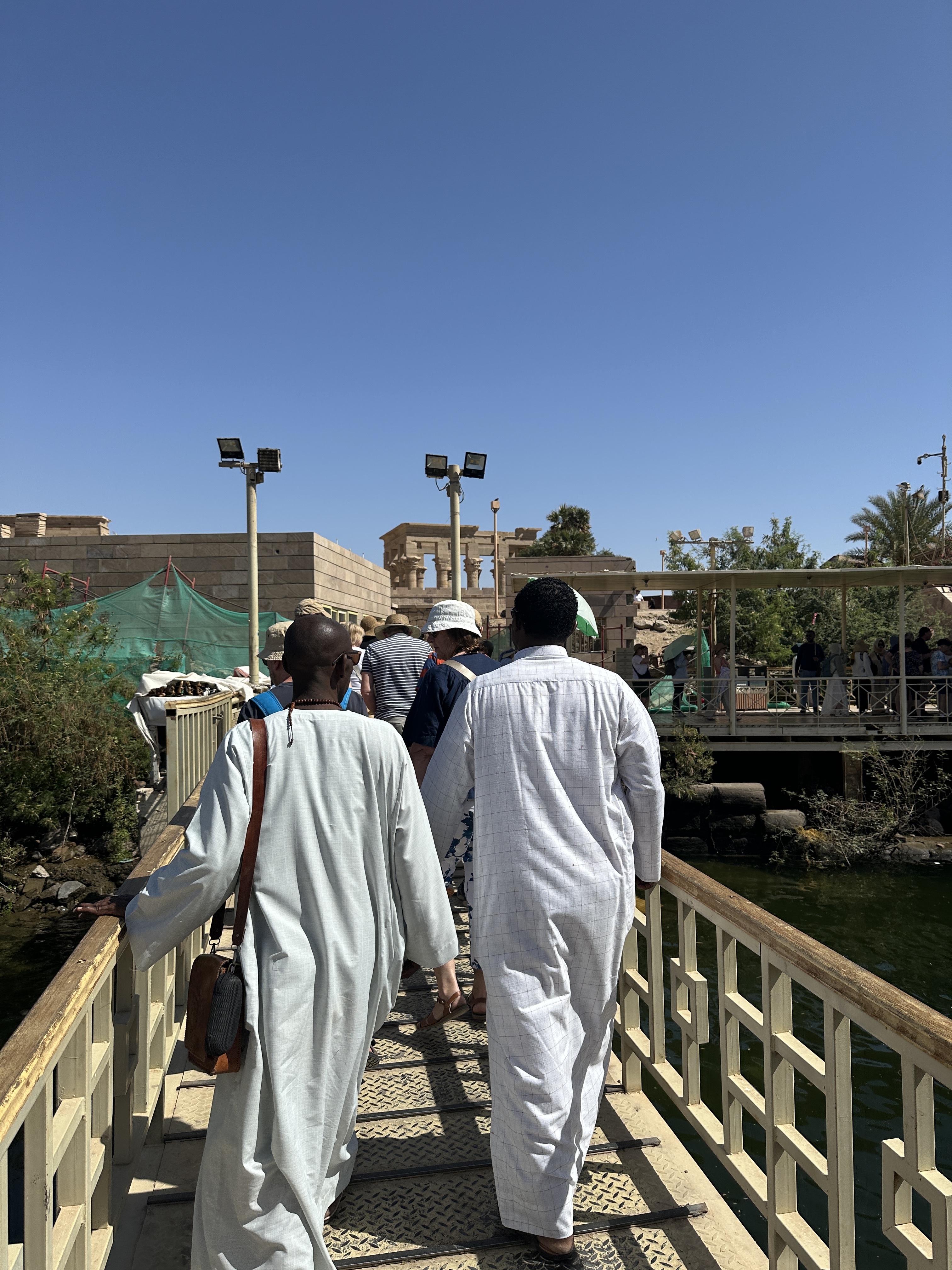
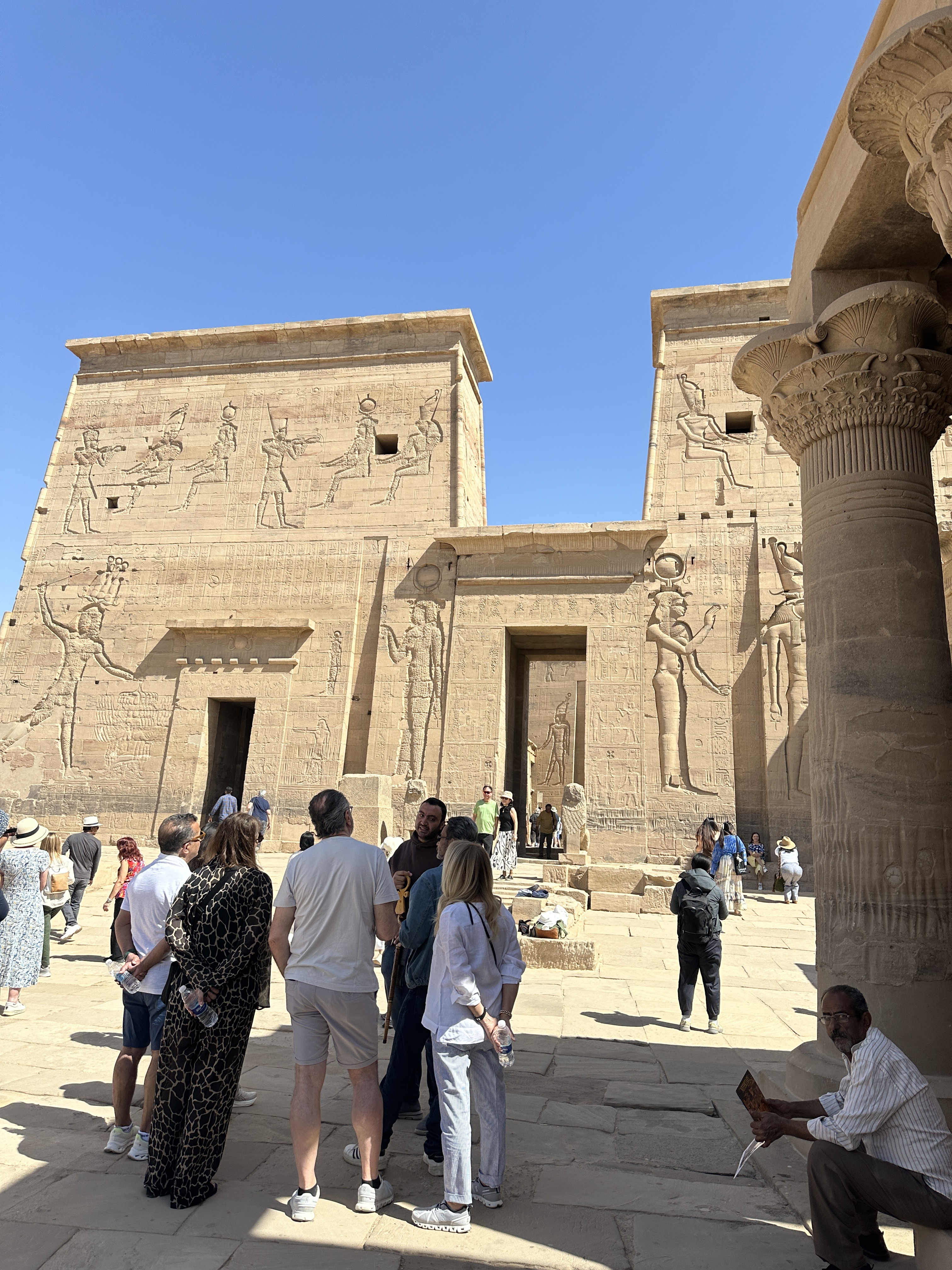
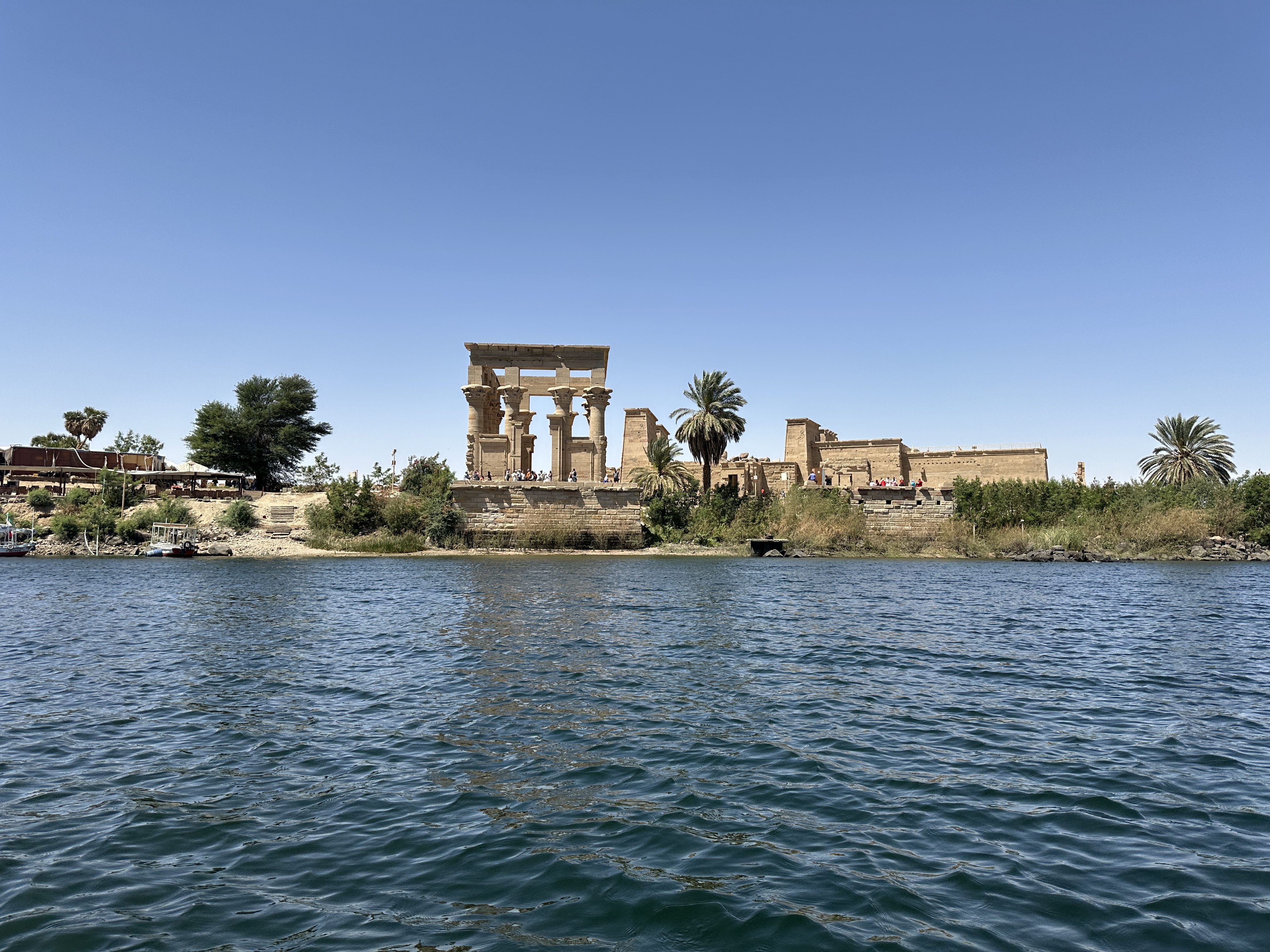
The Island of Philae was absolutely breath-taking. You reach the Temple of Isis by boat, a small speedboat from a jetty, the water bright and choppy, the temple appearing gradually on Agilkia Island ahead of you. The entire complex was dismantled and moved here stone by stone in the 1970s to save it from the rising waters of Lake Nasser, an extraordinary act of preservation that feels miraculous when you’re standing inside it. It was here where we bought bracelets and some alabaster bowls, small gifts for my family back home. There was no pressure, no hard sell, just warmth and generosity.
Day Five: The Nubian Village
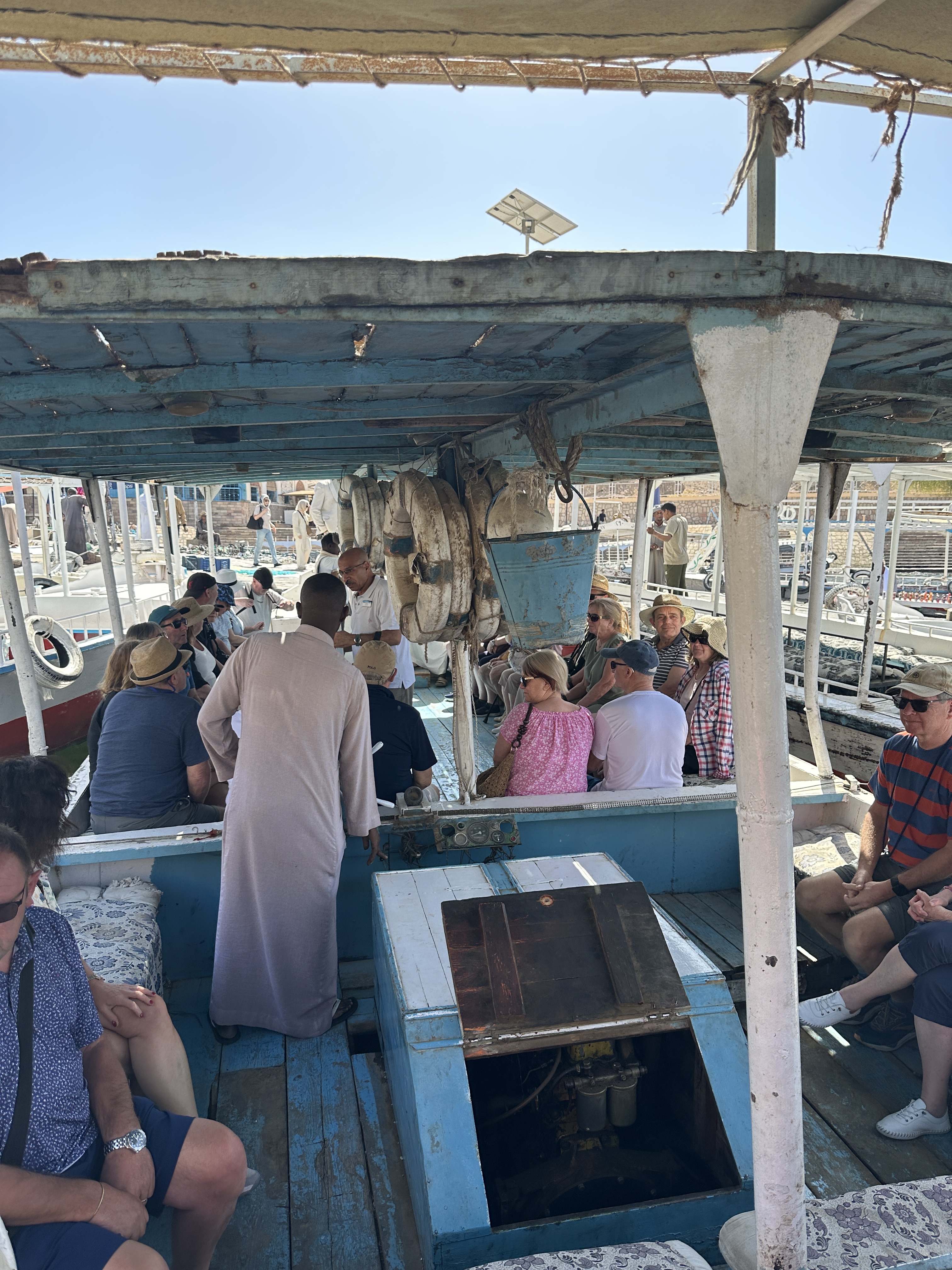
We set out by felucca, a traditional wooden sail boat, though the wind was uncooperative, so we spent a portion of the journey being towed by a speedboat, which felt entirely on-brand for Egypt’s cheerful pragmatism. Along the way, kingfishers dashed above the water, and herons stood motionless on rocks. We drifted past the Aswan Botanical Garden on its lush island, and the Mausoleum of the Aga Khan high on its golden hill.
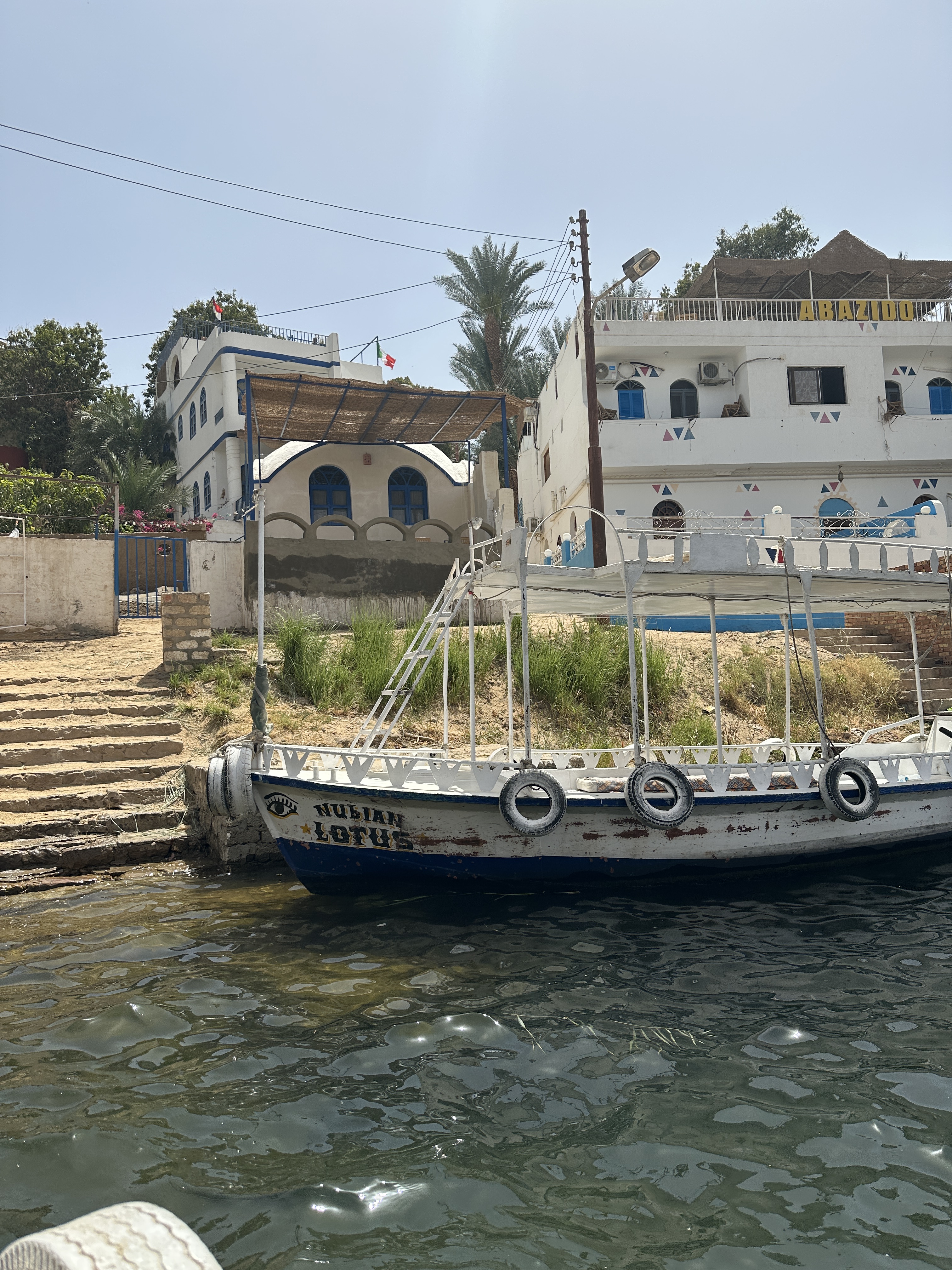
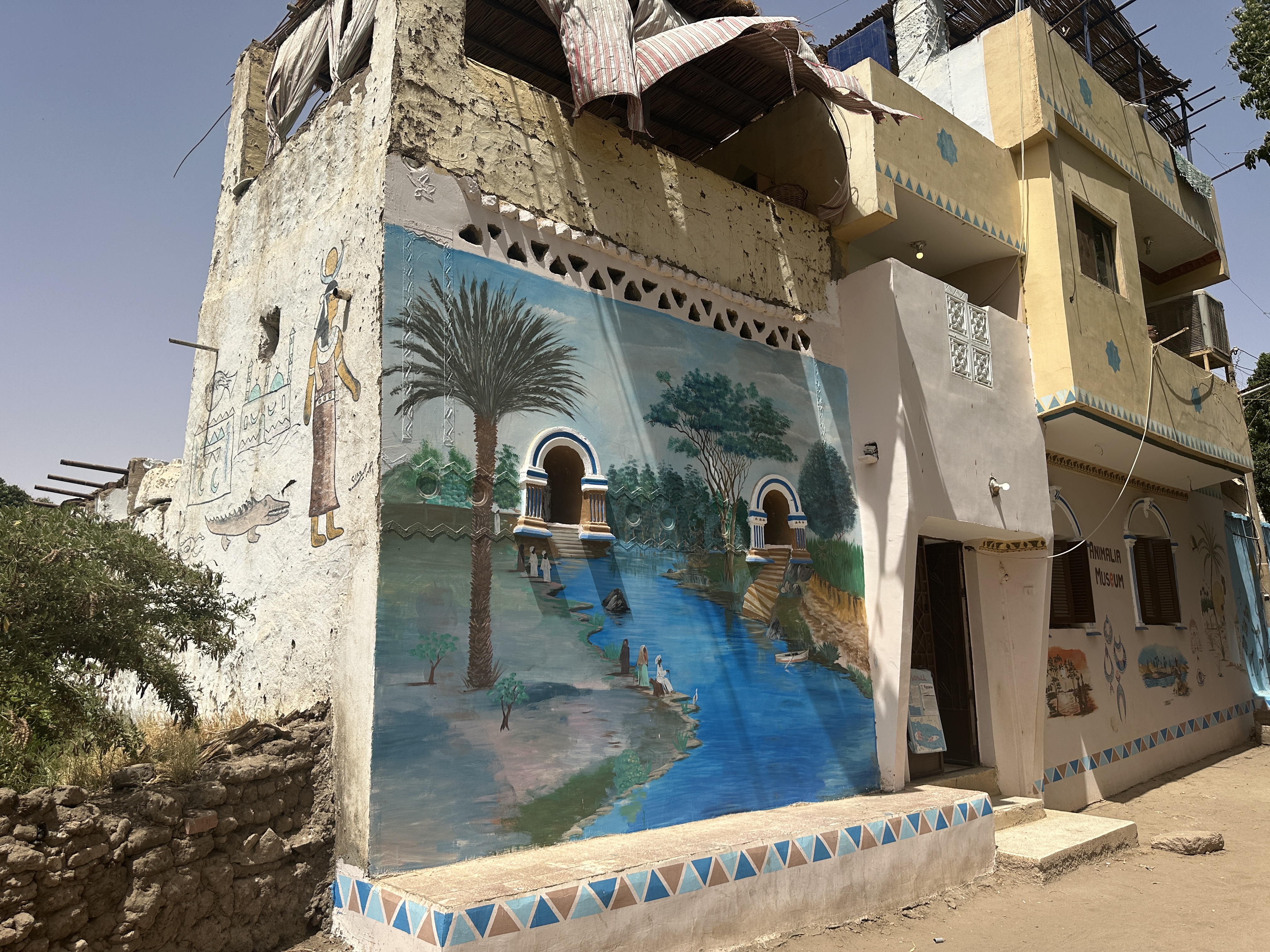
The Nubian village was reached by climbing steps up from the riverbank, and it was immediately, strikingly different from everything else we’d seen. The buildings were whitewashed with bright cobalt blue arched windows and doors, the exterior walls painted with vivid murals of palm trees and the Nile. The narrow sandy lanes between the houses framed glimpses of the river between white walls. It was genuinely beautiful.
A local guide told us that the word Nubia likely derives from the ancient Egyptian word for gold, as the region was historically rich in it. She explained that Nubian men often travel elsewhere in Egypt for work, while the women remain in the village, running everything: maintaining the community, educating the children and sending daughters on to university. It was a portrait of quiet resilience.
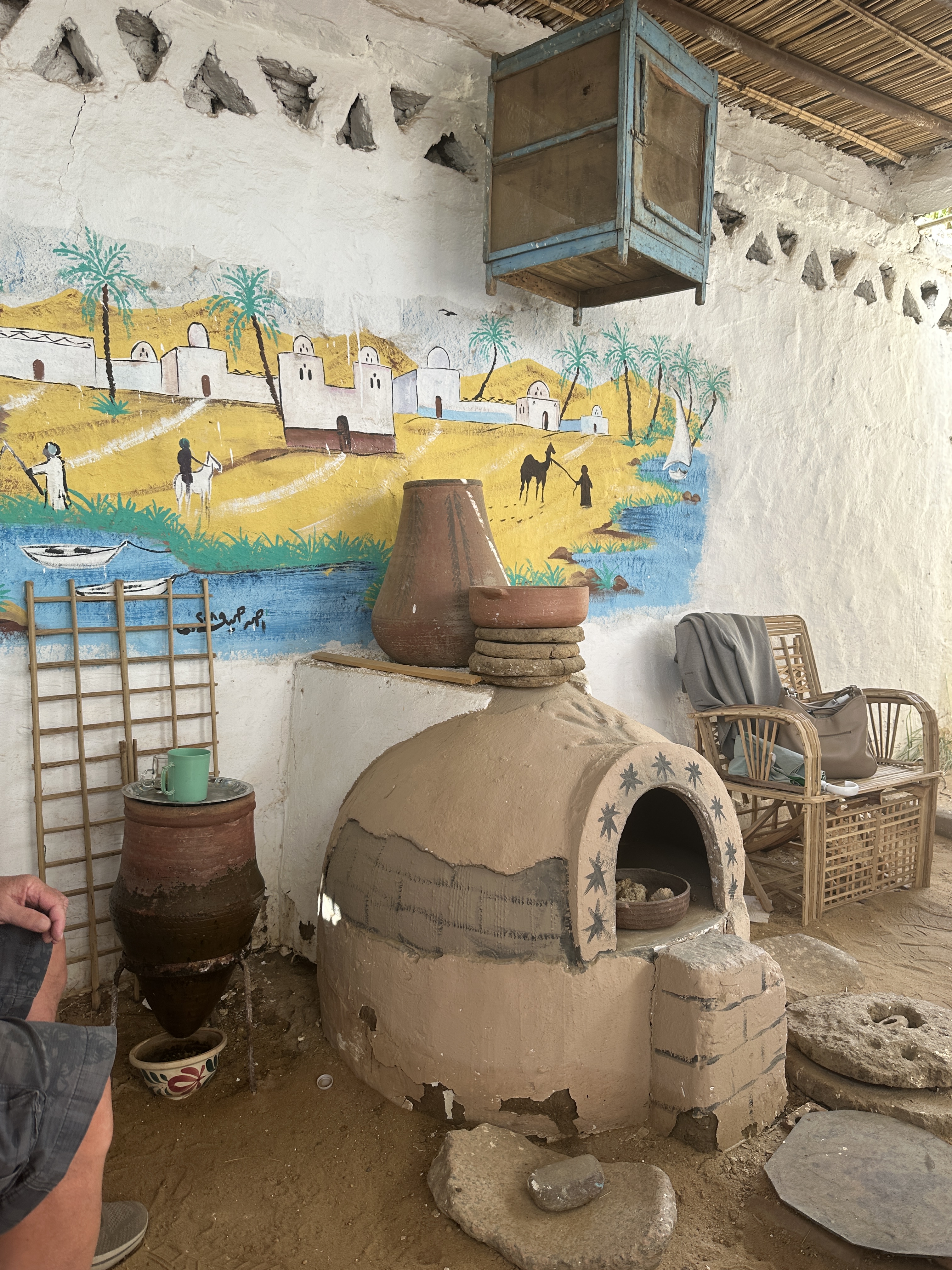
We were welcomed into a Nubian home, sitting on benches in a semi-open courtyard bear a decorative clay oven, drinking sweet mint tea from small glasses while our host explained daily life of the Nubian women. There was also a small museum, whose taxidermy collection I will remember fondly: a bird that appeared to have been assembled with googly eyes and the optimism of someone working without instructions. I regret now not photographing it.
Day Six: Abydos, Dendera and the road in between
Day six was an epic: a nine-hour trip by minibus to visit the temples of Abydos and Dendera, with just eight of us in the group plus Ayman and our driver. The intimacy of a small group suited the day perfectly.
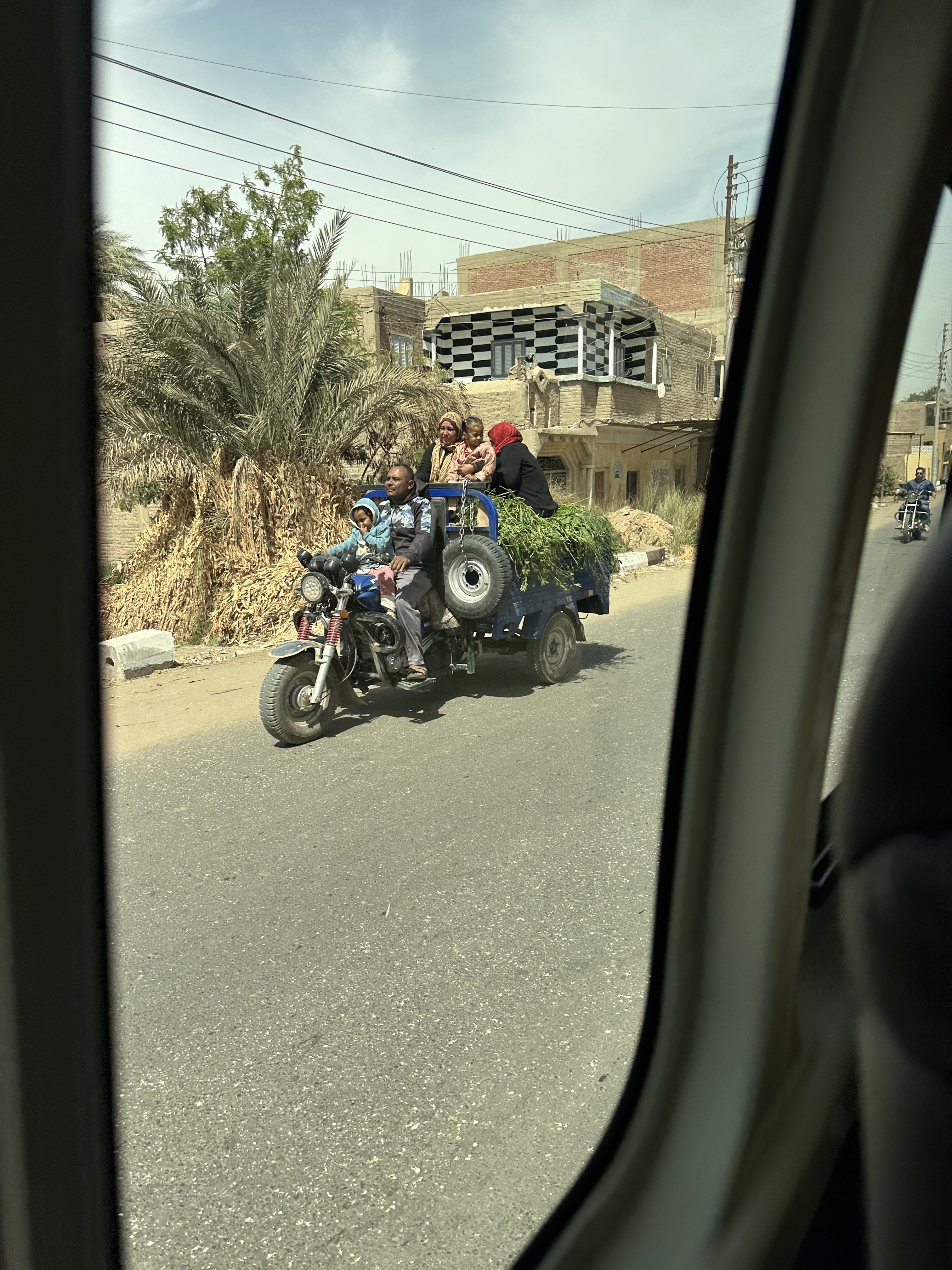
The journey itself was half the entertainment. Egyptian road etiquette, if such a thing exists, operates on a system of beeps and prayers. Our driver was a model of serene competence, navigating everything with quiet authority while Ayman leaned out of the window to express his views to other road users in colourful terms. We passed families of four or five on a single motorbike, overtook a cart loaded with sugar cane with children attempting to steal from it as it moved, and spotted houses in various states of multi-generational construction. Ayman explained that in Egypt, a grandfather builds the ground floor, his son adds the middle storey, and the grandson finishes the top. Planning permission operates differently here too: anywhere ancient remains might be found is protected with absolute seriousness. Houses in Luxor have been demolished when significant archaeological sites were discovered beneath them.
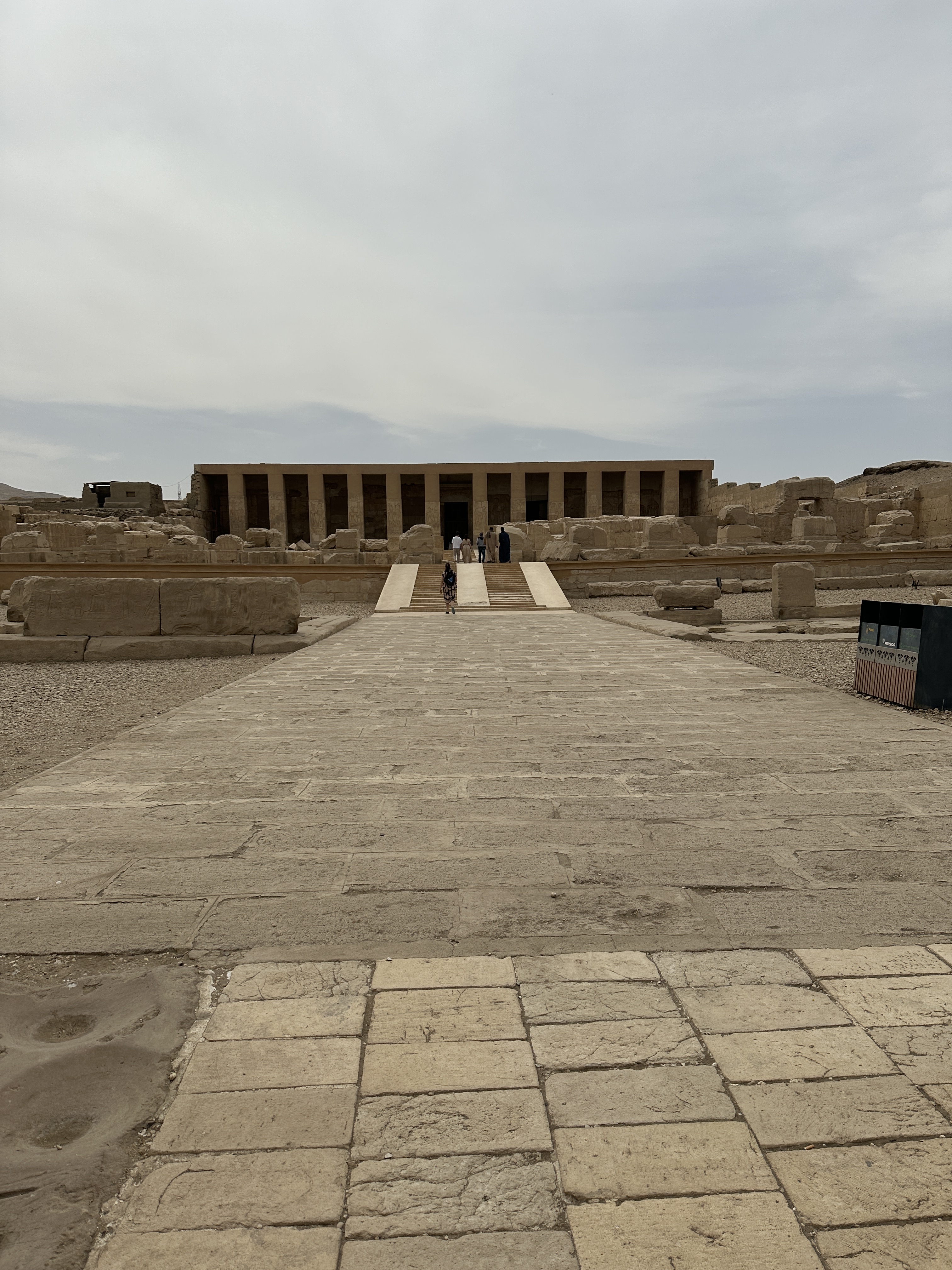
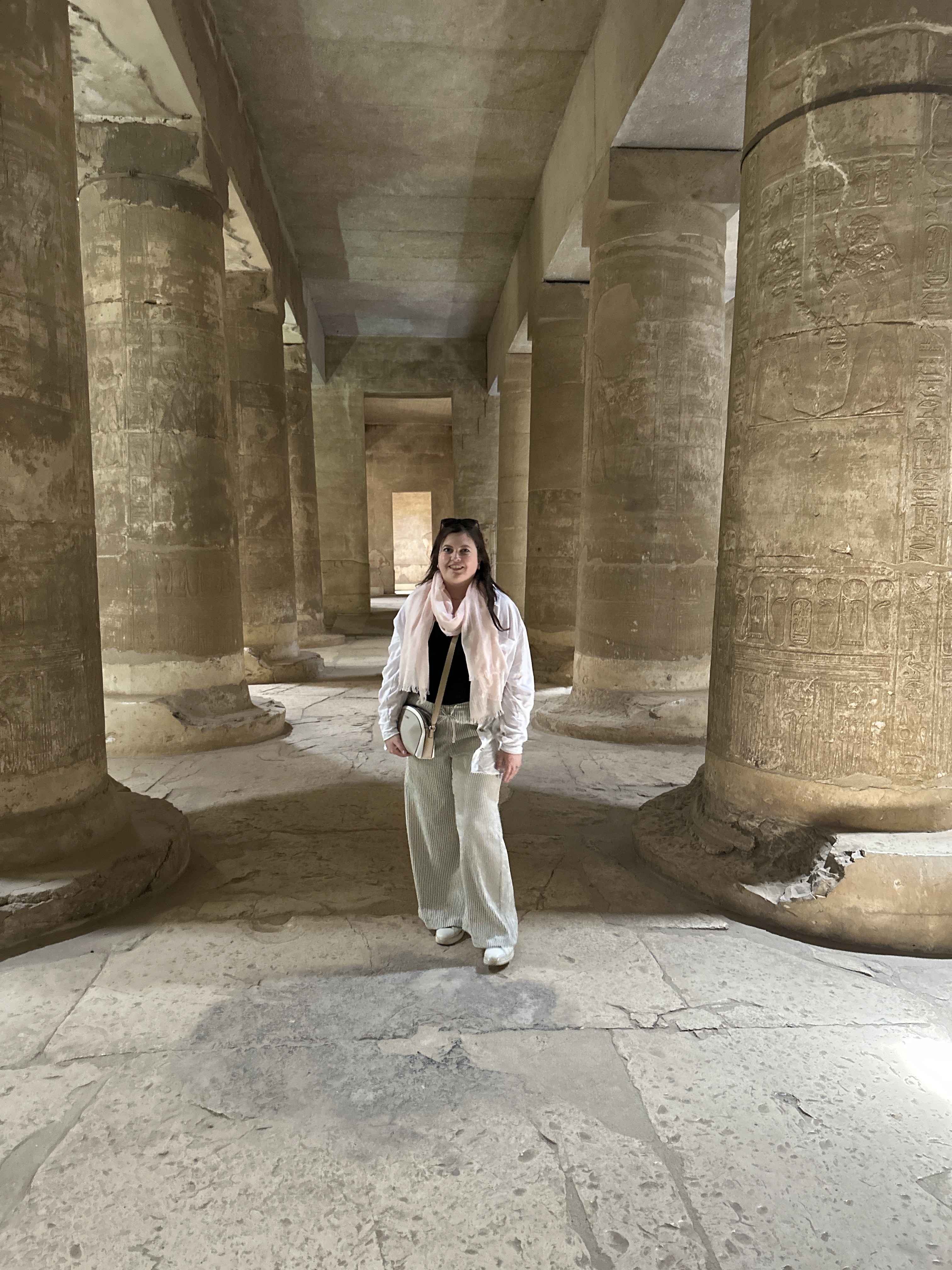
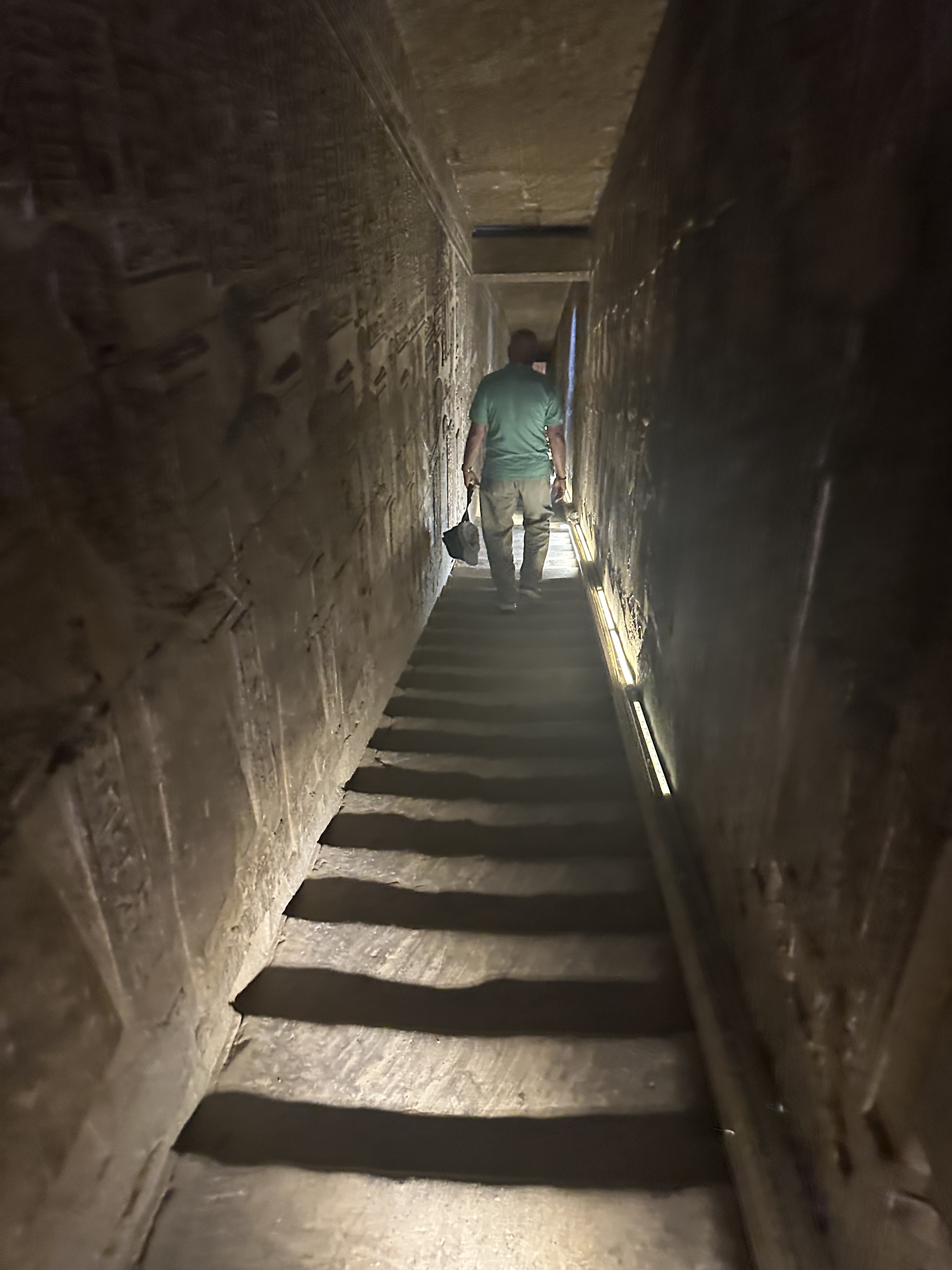
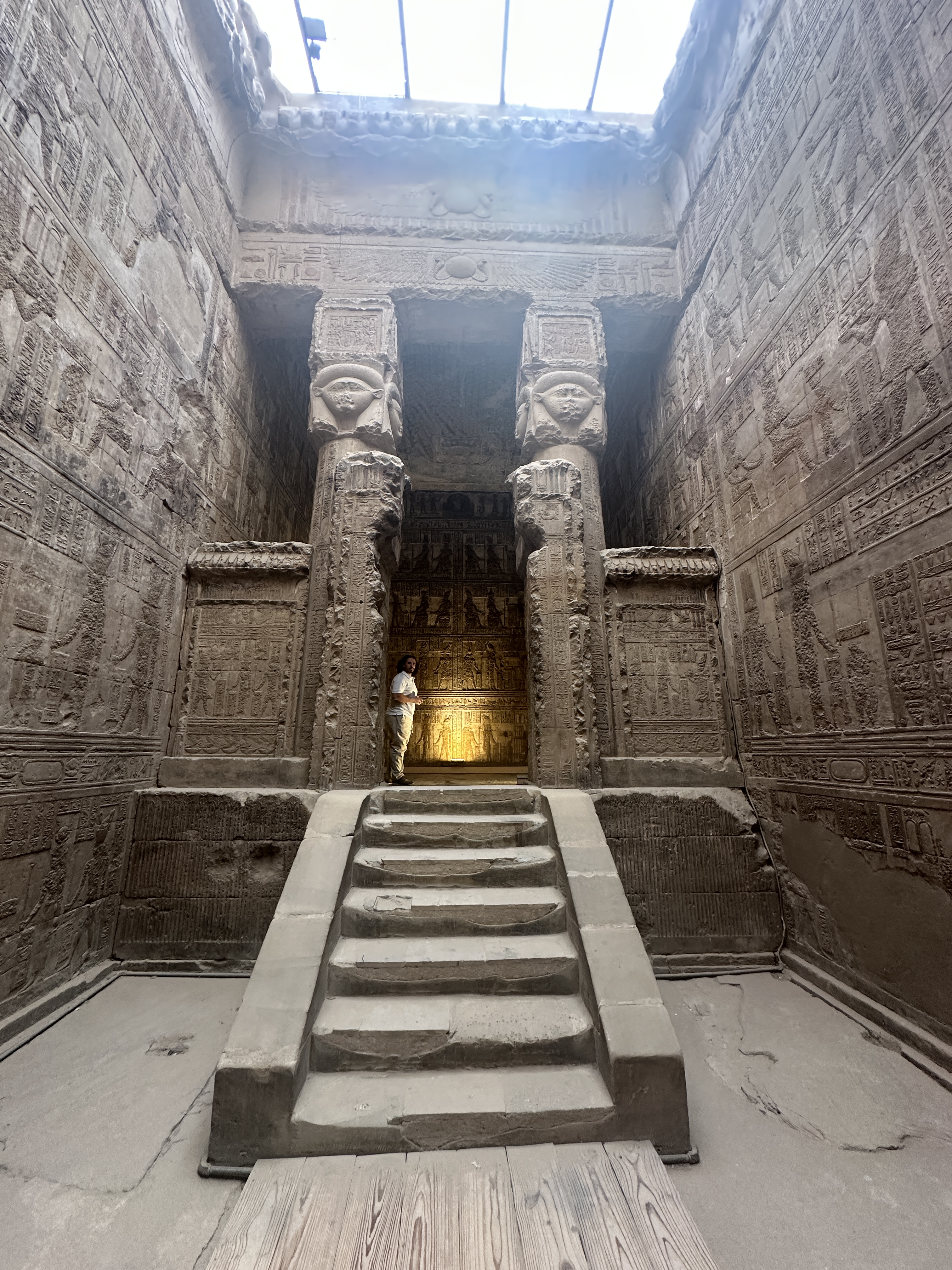
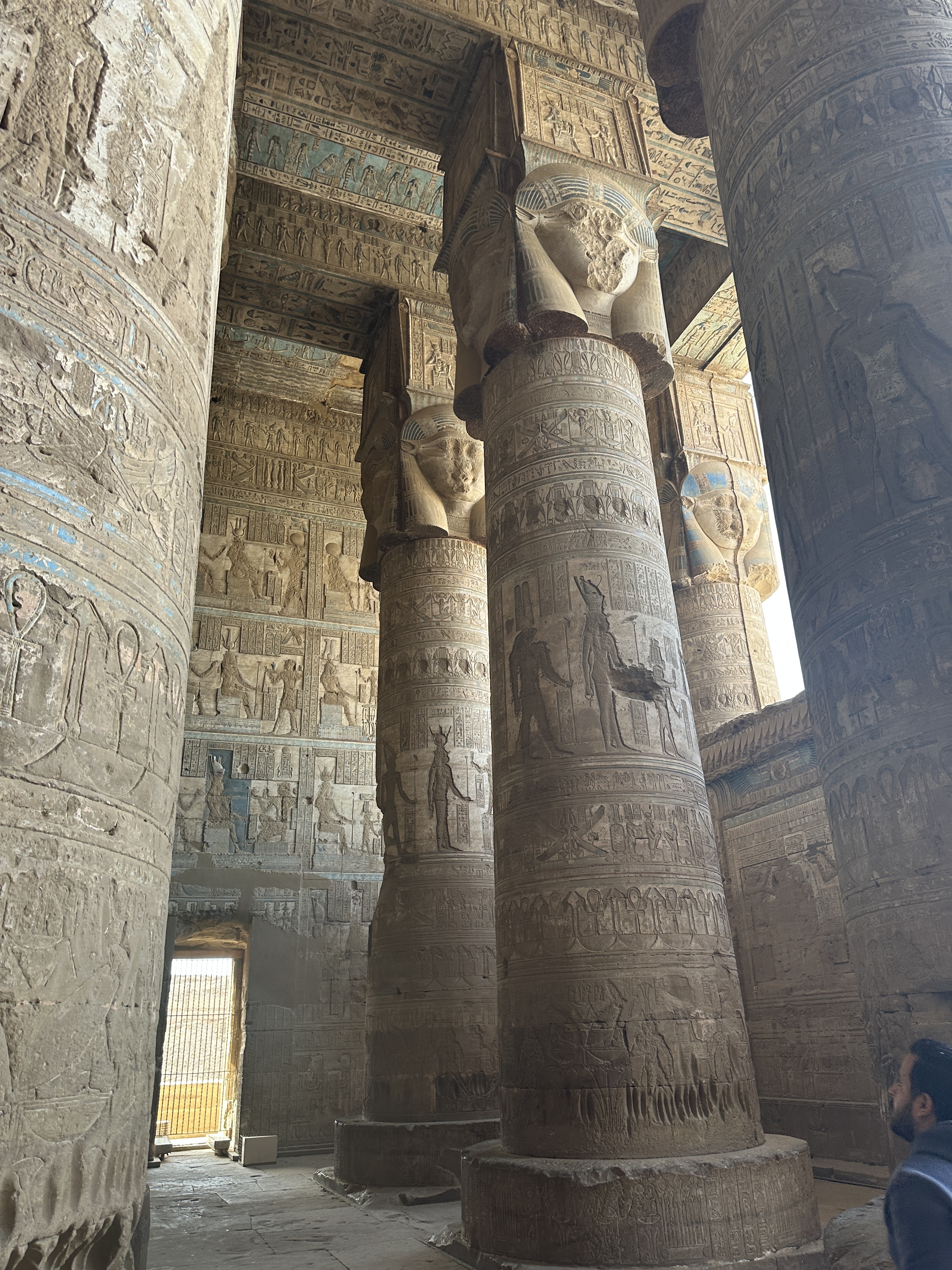
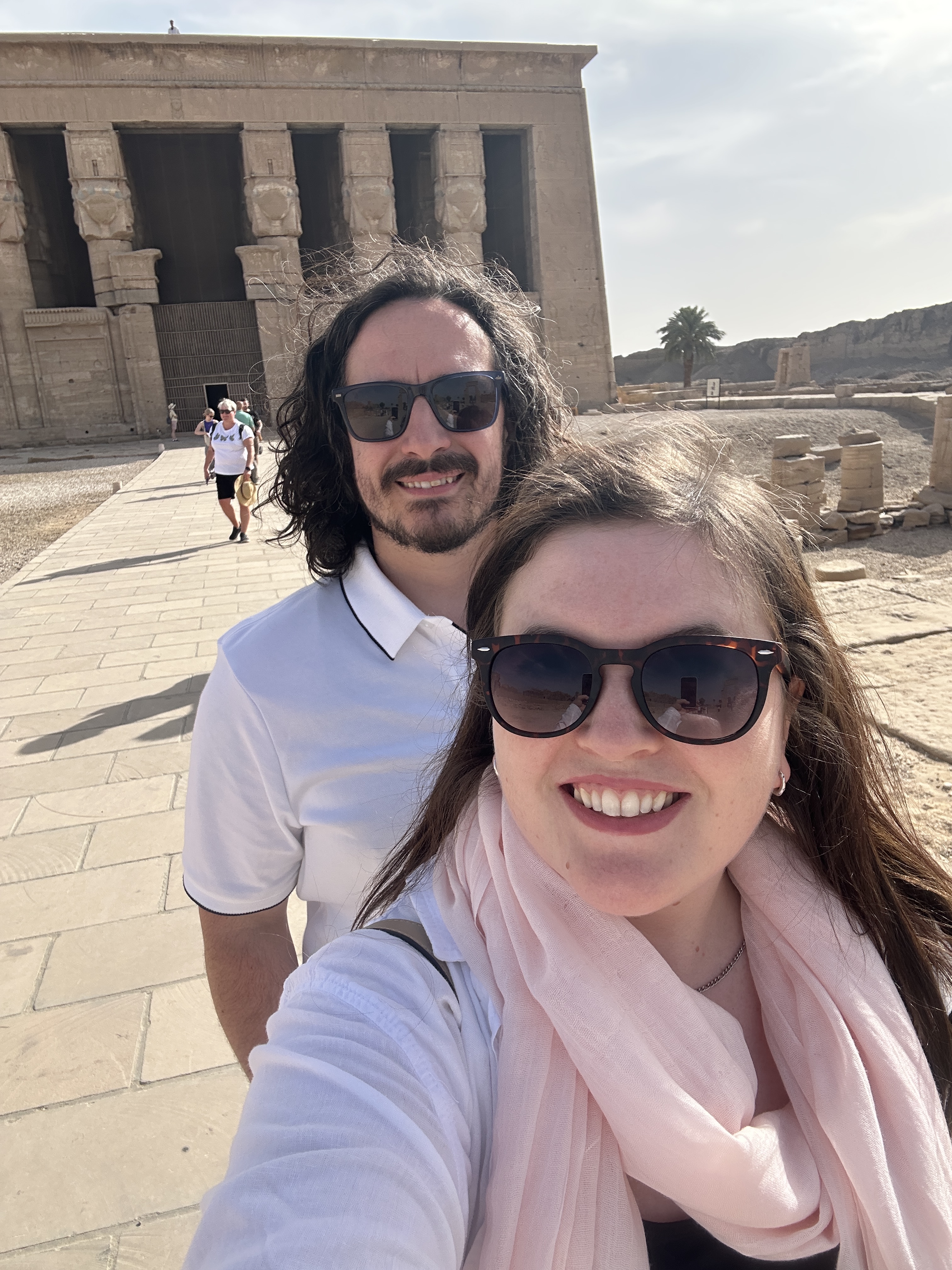
The Temple of Seti I at Abydos is astonishing, one of the finest examples of New Kingdom relief carving (like an embossed effect) anywhere in Egypt. But Dendera was my favourite temple of the entire trip. The Temple of Hathor, whose serene face tops each of the great columns, is unique among Egyptian temples in offering visitors the chance to go upstairs. One staircase spirals upwards in imitation of a hawk rising on a thermal; the other descends in a straight ramp, like a falcon dropping to strike.
On the ceiling, a replica of the famous Dendera Zodiac, one of the earliest known star maps, gazes down at visitors. The original was controversially removed by French archaeologists in 1820 and now resides in the Louvre. It’s a genuine source of sadness; Egypt’s antiquities have been scattered across the world’s great museums, and the question of repatriation hangs over every visit.
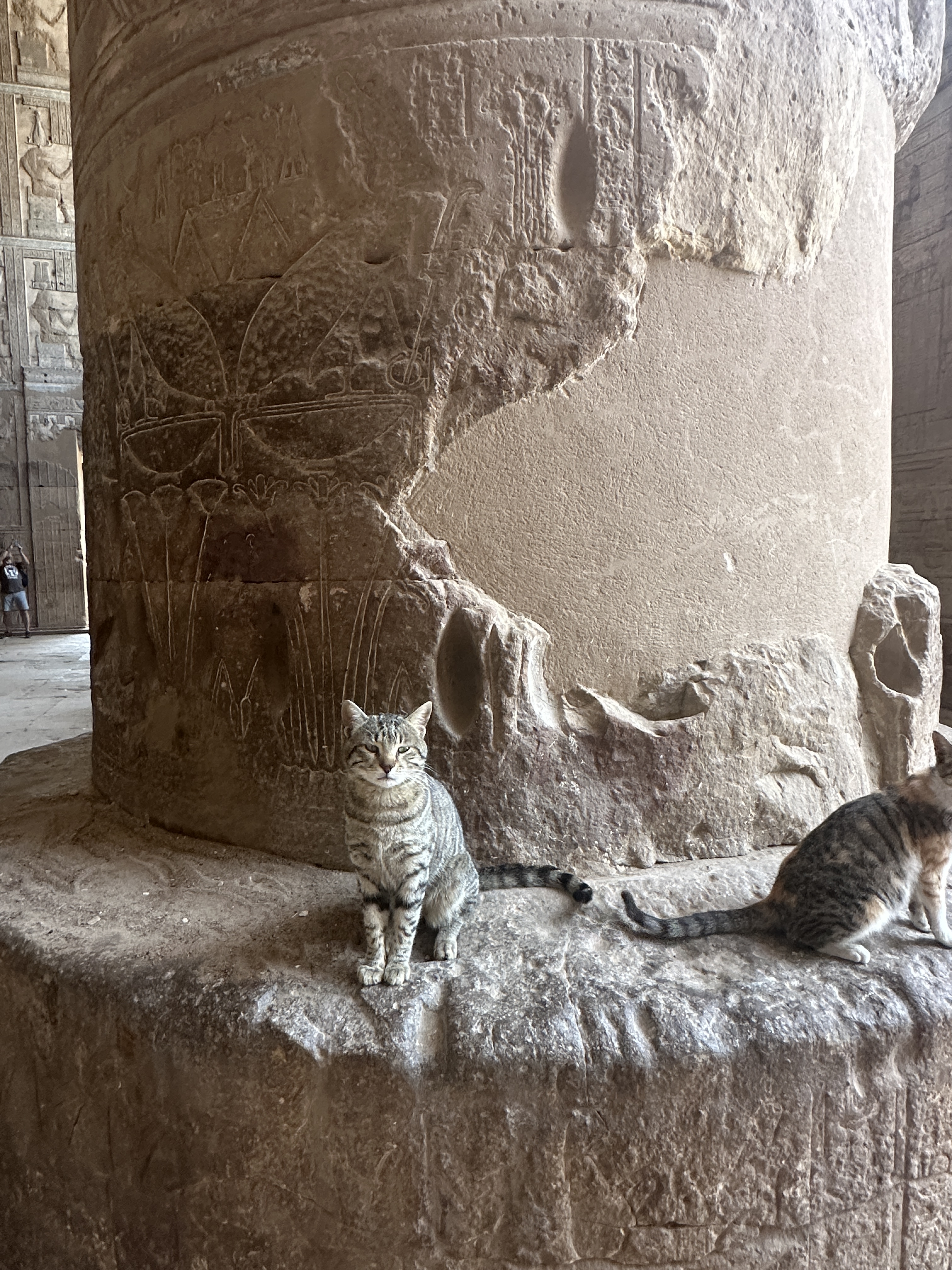
At Dendera, two cats sat unbothered at the base of an ancient column, gazing at visitors with magnificent indifference. Cats have been revered in Egypt for centuries. These ones clearly knew it. Throughout the trip we encountered dogs and cats at almost every temple, strays technically, but all well-fed and treated with kindness by the Egyptian people around them.
Day Seven: The Museums and saying goodbye
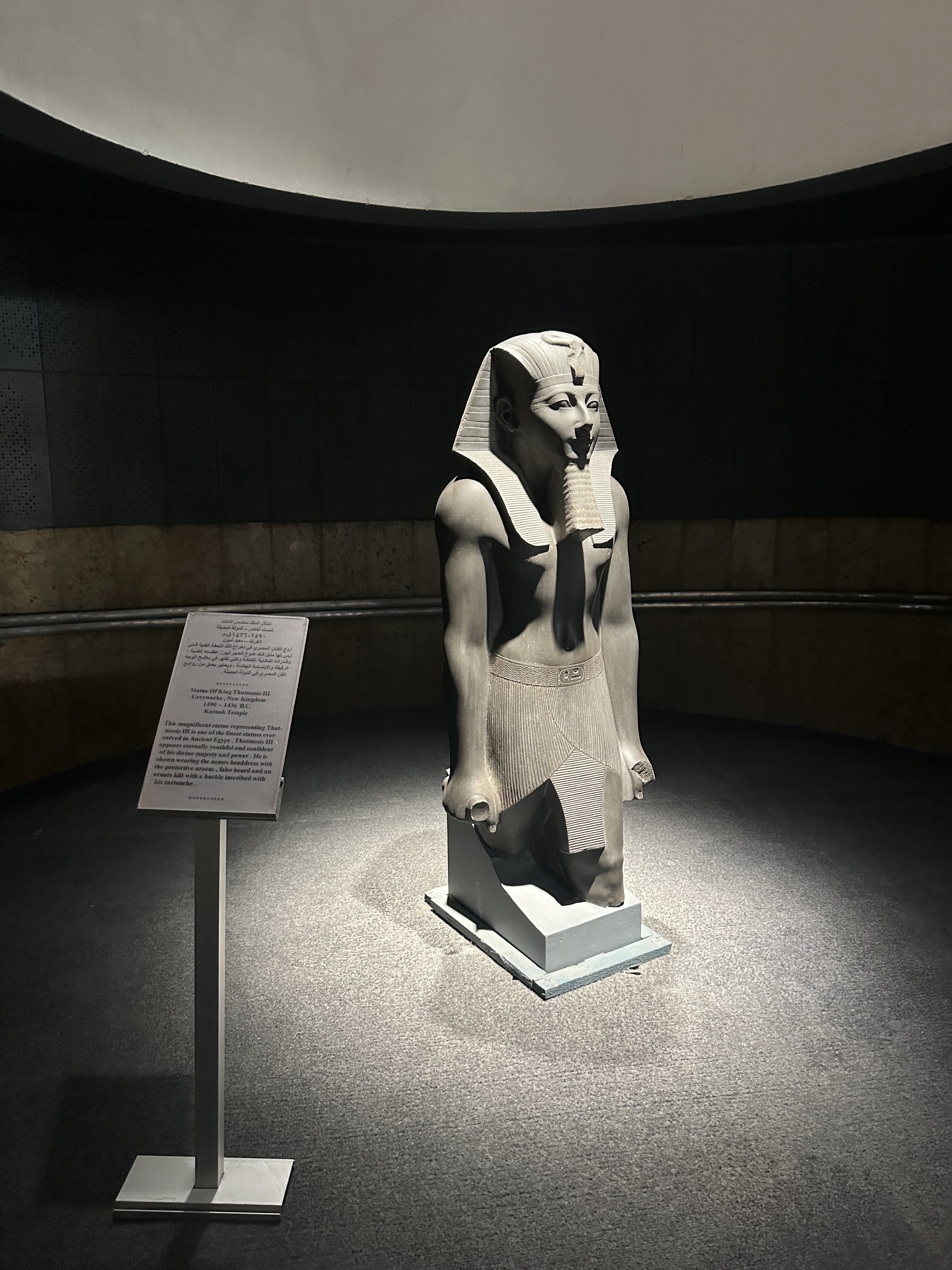
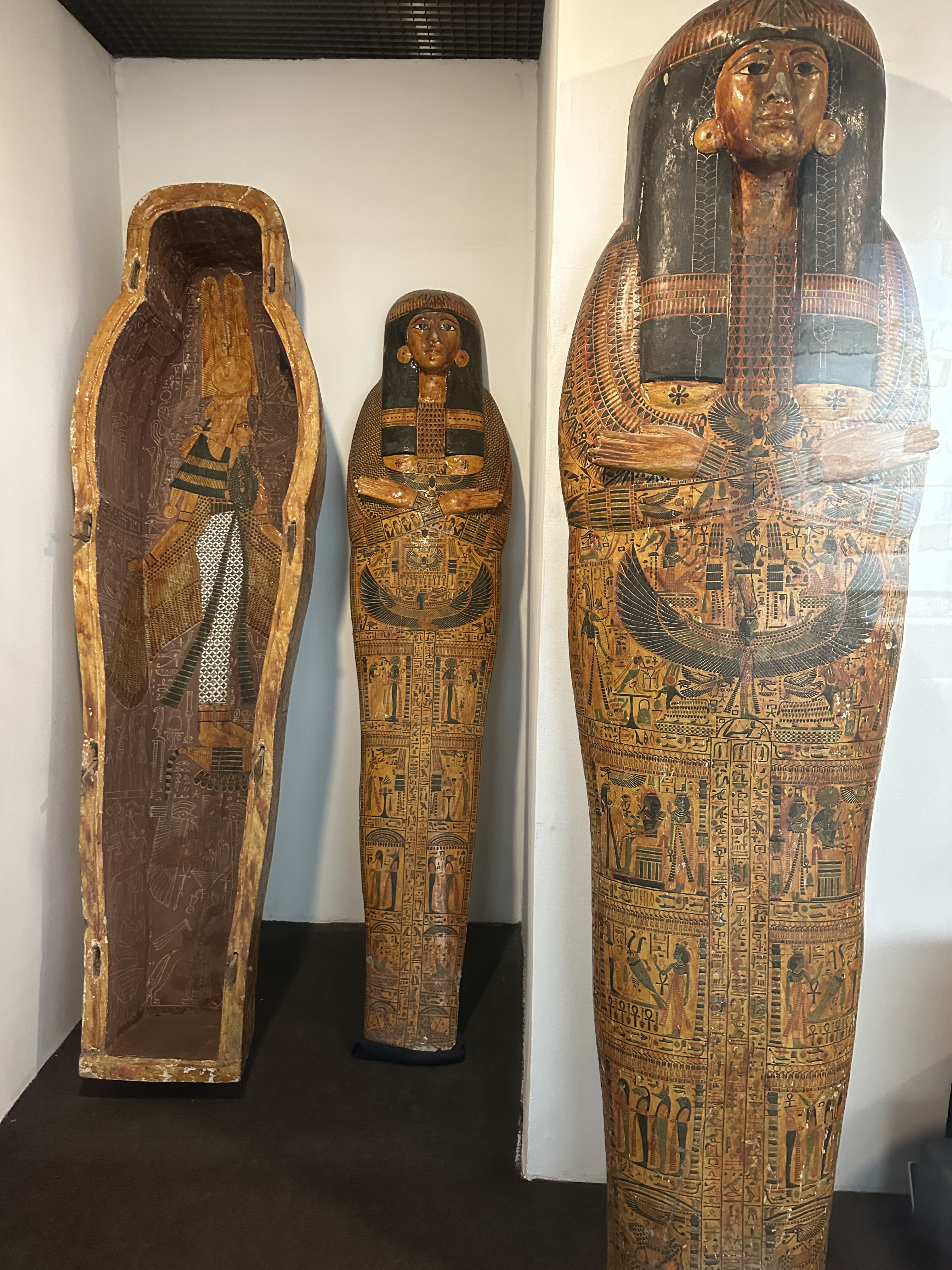
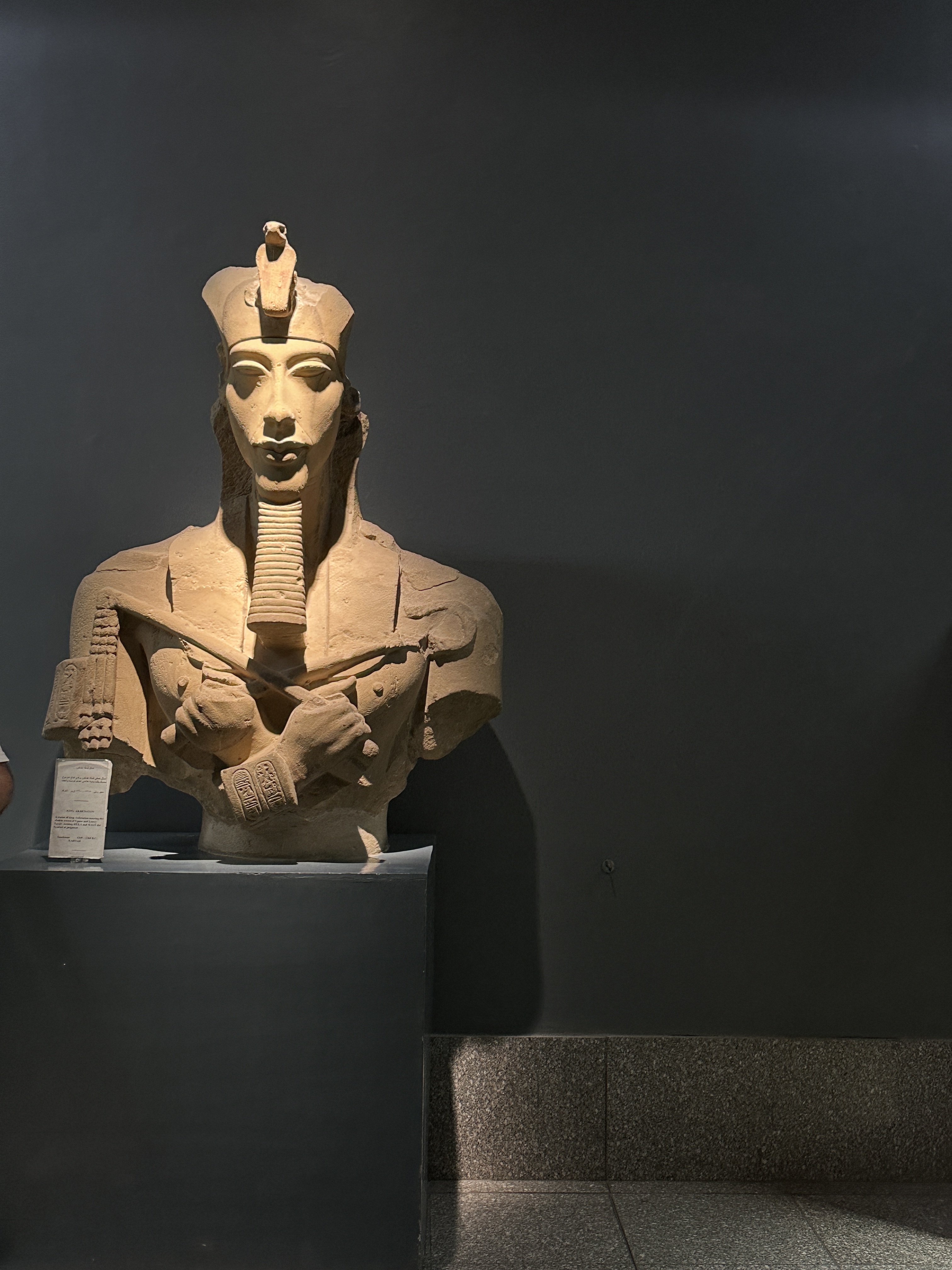
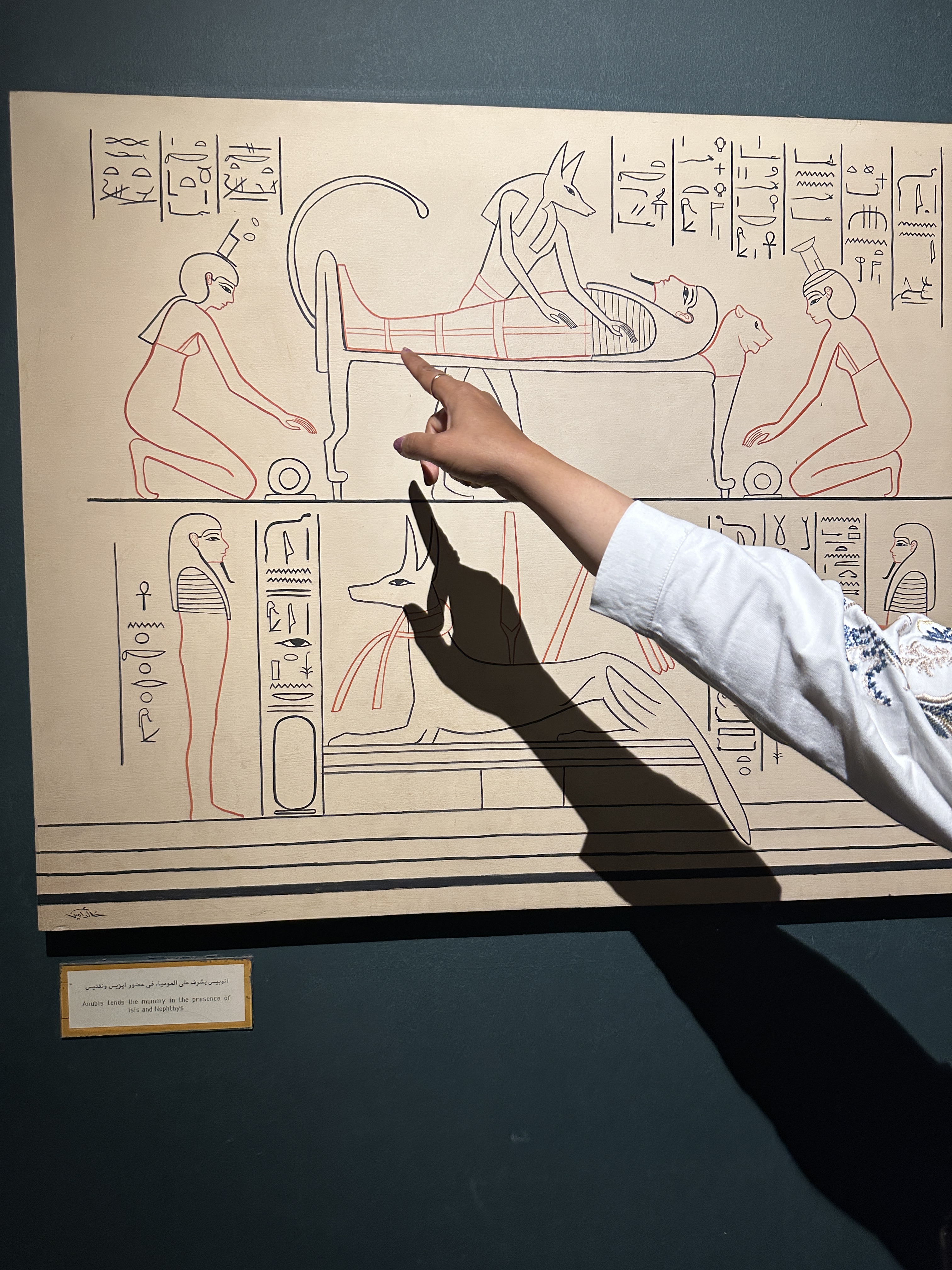
For our final morning we opted for a private tour of the Luxor Museum and the Mummification Museum, a decision I’d recommend to anyone with genuine curiosity and the budget for it. Our guide Mariam, an Egyptologist of 25 years, was able to go far deeper into individual pieces than any group tour would allow. She walked us through the chronology of the Old, Middle and New Kingdoms in a way that suddenly made everything we’d seen that week click into place: why the early pharaohs built pyramids that got looted and why the New Kingdom rulers hid their tombs in the valleys instead.
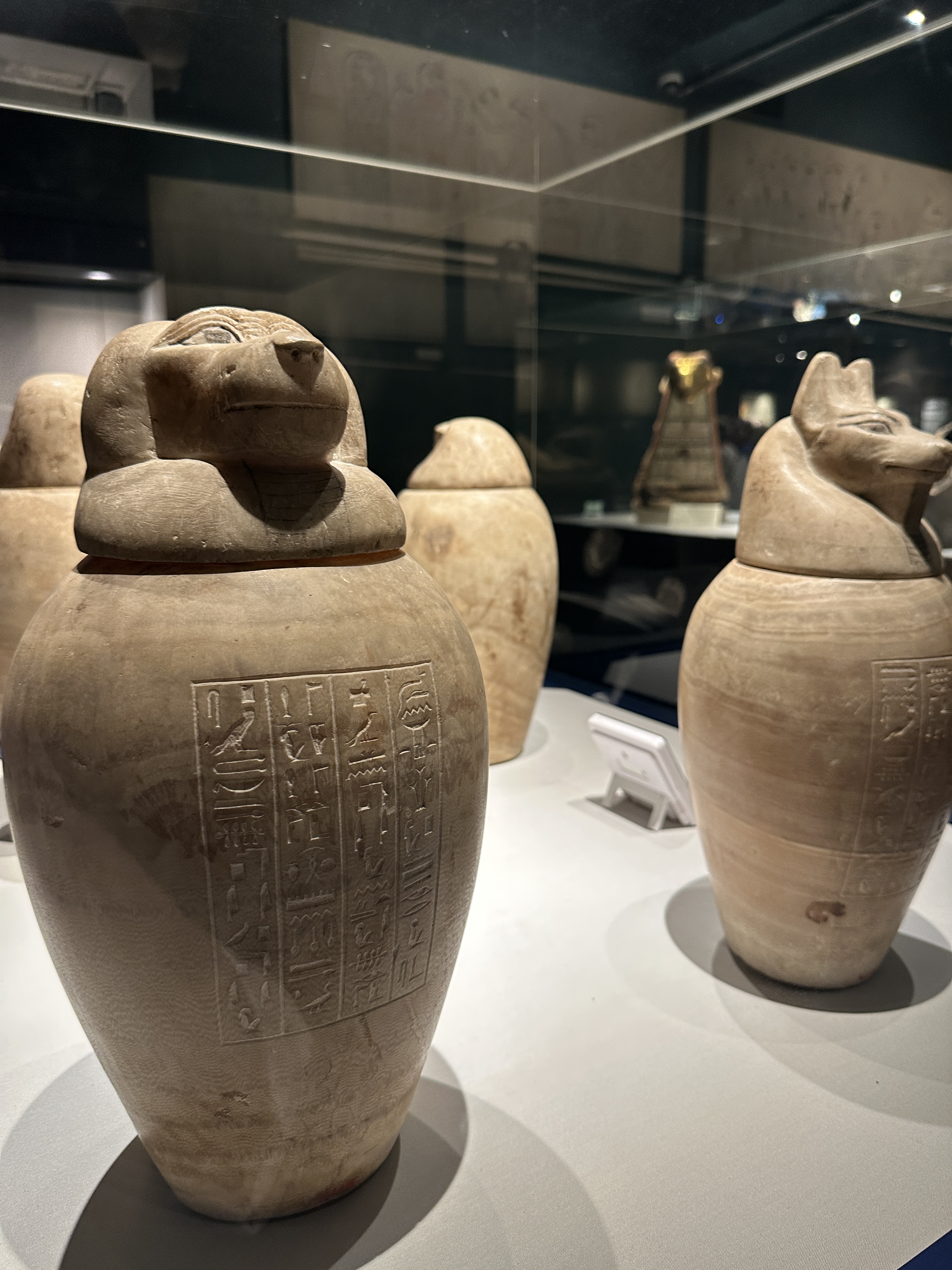
She showed us the mummies, Ahmose I and the other, potentially Ramesses I. She explained Akhenaten, Tutankhamun’s father, whose unusually realistic artistic depictions, elongated skull, wide hips and protruding belly, suggested physical abnormalities possibly linked to generations of royal intermarriage. And she walked us through the mummification process at the Mummification Museum: the canopic jars for the organs, the weighing of the heart against the feather of Ma’at, the preparations for the journey ahead. The canopic jars on display were so perfectly formed that Mariam noted archaeologists have debated whether ancient lathes must have been used, and if so, where those tools are now remains a mystery.
By midday we were back on the ship for checkout, spending our last hour or two on the sun deck or in the Observatory bar, quietly processing the week. Then Ayman found us. He had said that we were like a son and daughter to him, and he wanted a photo to remember us by. Standing there with him I realised that the thing I hadn’t expected, having perhaps been a little afraid given my mixed childhood memories of Egypt, was how completely and unreservedly welcomed I would feel. By Ayman. By the Nubian women in their village. By the staff on the Al Horaya. By the golf cart driver with his best Del Boy impression. By Egypt itself.
Rob said it was the best holiday he’d ever had. I think I agree.
Good to know…
Getting there: TUI offer all-inclusive Nile cruise packages from UK airports including Gatwick. The Al Horaya sails between Luxor and Aswan.
Visa: You can get your Egyptian tourist visa on arrival at Luxor Airport. Bring US dollars in cash. It’s straightforward and takes minutes. Don’t rely on the online system unless you’re confident it’s gone through.
Valley of the Kings: The standard ticket covers three tombs. Tutankhamun’s tomb (KV62) and Seti I’s (KV17) require separate additional tickets, so budget accordingly if these are on your list.
Excursions: TUI include two complimentary excursions (Edfu and Kom Ombo). Budget separately for additional tours. We spent around £900 across the week and felt every penny was justified.
When to go: We visited in March, during the tail end of Ramadan, and found the sites noticeably quieter than peak season. The heat was around 34°C, warm but manageable with good sun protection.
Private tours: For museums especially, a private guide is worth the additional cost. The ability to linger on individual pieces and ask questions transforms the experience.
 Lucky Journeys